
What Is a Health and Safety Audit? A Complete Guide for UK Businesses

A health and safety audit is one of the most effective ways to find out whether your business is actually managing risk properly, or just going through the motions. While most businesses have some form of safety documentation in place, an audit tests whether those systems are working in practice, not just on paper.
This guide explains what a health and safety audit involves, what auditors look for, how it differs from a risk assessment or inspection, and how to prepare your business for one.
What Is a Health and Safety Audit?
A health and safety audit is a systematic review of your entire safety management system. It looks at your policies, risk assessments, training records, accident reporting, emergency procedures, and day-to-day working practices to assess whether they are effective, consistent, and legally compliant.
Unlike an inspection, which focuses on physical conditions at a specific point in time, an audit looks at the bigger picture. It asks questions like: are your risk assessments up to date and specific to your current activities? Are your staff trained and competent? Are accidents and near misses being reported and investigated? Is your health and safety policy being followed in practice, or is it sitting in a drawer?
The goal is to identify gaps between what your documentation says and what is actually happening on the ground, and to provide practical recommendations for closing those gaps.
What Does an Auditor Check?
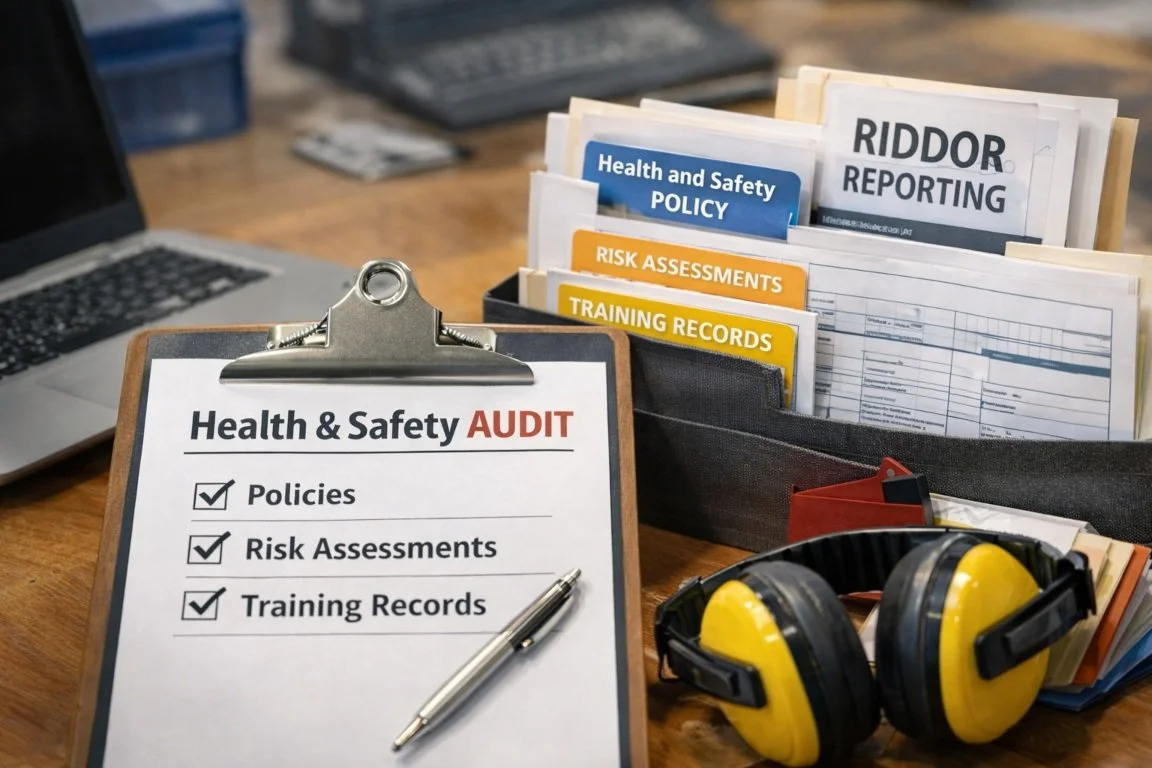
A typical health and safety audit covers the following areas. Your health and safety policy, including the statement of intent, organisation of responsibilities, and arrangements. Risk assessments for all significant work activities, checked for accuracy, specificity, and whether they have been communicated to staff. Training records, including induction records, job-specific training, refresher training, and CSCS or other competence cards. Accident and incident reporting, including whether your RIDDOR obligations are being met. Fire safety arrangements, including your fire risk assessment, alarm testing records, extinguisher servicing, and evacuation drill records. Welfare facilities, first aid provision, and emergency planning. Compliance with specific regulations relevant to your industry, such as CDM, COSHH, manual handling, working at height, or display screen equipment.
The auditor will typically review documents, interview management and staff, and carry out a physical inspection of the workplace to verify that what is written down matches what is happening in practice.
Audit vs Inspection vs Risk Assessment — What Is the Difference?
These three terms are often used interchangeably, but they mean different things. A risk assessment identifies specific hazards and the control measures needed to manage them. It is task-focused and legally required. An inspection is a physical check of the workplace to identify immediate hazards, such as damaged equipment, blocked fire exits, or poor housekeeping. It is condition-focused. An audit is a review of your entire safety management system to assess whether it is effective and compliant. It is system-focused.
All three are important, but an audit gives you the strategic overview that risk assessments and inspections cannot. For a more detailed comparison, read our guide on the difference between a risk assessment and a safety audit.
Why Your Business Needs an Audit
There are several reasons to invest in a health and safety audit. Legal compliance is the most obvious. The Health and Safety at Work Act 1974 and associated regulations require employers to manage health and safety effectively. An audit provides documented evidence that you are meeting this duty. Insurance requirements are another driver. Many insurers expect to see evidence of regular audits, and some offer reduced premiums to businesses that can demonstrate proactive safety management. Client and accreditation requirements are increasingly common. If you are working towards SSIP accreditation through CHAS, Safe Contractor, or Constructionline, an audit report can demonstrate that your systems meet the required standards. Finally, audits simply make your business safer. By identifying weaknesses before an incident occurs, you reduce the risk of accidents, compensation claims, prosecution, and reputational damage.
How to Prepare for a Health and Safety Audit
Before an audit, make sure your documentation is accessible and up to date. Gather your health and safety policy, risk assessments, training records, accident book, fire risk assessment, insurance certificates, and any RAMS or method statements for current projects. Make sure your staff know an audit is happening and are prepared to answer questions about their training, their understanding of workplace risks, and the procedures they follow.
Use our health and safety compliance checklist to work through the basics before the auditor arrives. This will help you identify any obvious gaps and fix them in advance.
What Happens After the Audit?
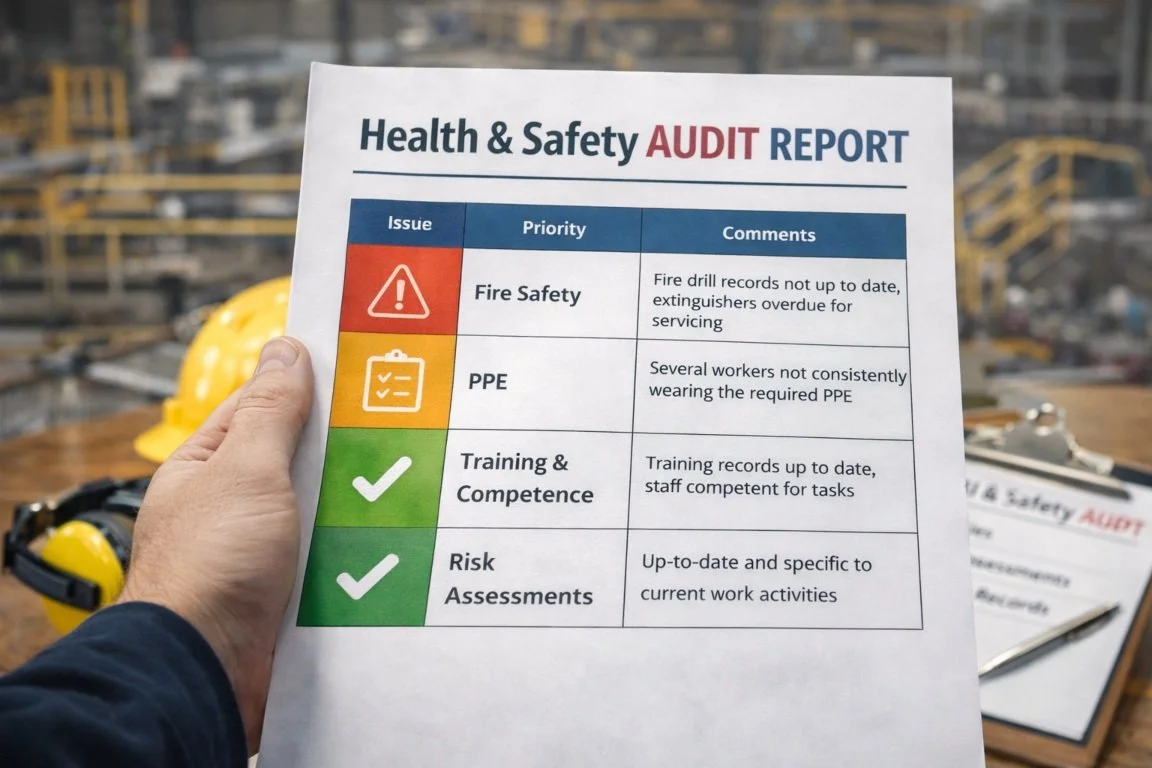
After the audit, you will receive a written report summarising the findings, highlighting areas of good practice, and setting out recommendations for improvement. A good audit report will prioritise the recommendations, usually using a RAG rating system (red, amber, green) so you know which issues need urgent attention and which can be addressed over time.
The real value of an audit comes from acting on the findings. Review the report, assign actions to named individuals, set deadlines, and follow up to make sure improvements are actually made.
Book a Health and Safety Audit
If your business has never had an independent health and safety audit, or if it has been more than 12 months since your last one, now is a good time to arrange one. Our health and safety audit service provides a thorough, practical review with clear recommendations, carried out by qualified consultants who understand the specific needs of UK SMEs and contractors.
For more detail on what happens during the process, read our guide on what to expect during a health and safety audit.
