
The Difference Between a Risk Assessment and a Safety Audit — Explained
Understanding workplace safety can be confusing, especially when terms like risk assessment and safety audit are used interchangeably. Although both are essential parts of a strong health and safety management system, they serve very different purposes.
In this guide, we break down what each one involves, how they differ, and why every organisation should carry out both regularly.
What Is a Risk Assessment?

A risk assessment is a proactive process used to identify potential hazards before they cause harm. Every employer has a legal duty to complete risk assessments, and they should be reviewed whenever there are changes in work activities, equipment, or processes. In practice, risk assessments often form part of broader documentation such as RAMS for contractors, which outline both identified risks and the safe systems of work required on-site.
Need professional risk assessments? Our RAMS service provides tailored risk assessments and method statements for contractors and businesses.
Key elements of a risk assessment:
Identifying hazards
Determining who may be affected
Evaluating the level of risk
Implementing control measures
Reviewing and updating regularly
In simple terms:
A risk assessment asks “What could go wrong, and how do we stop it?”
What Is a Safety Audit?
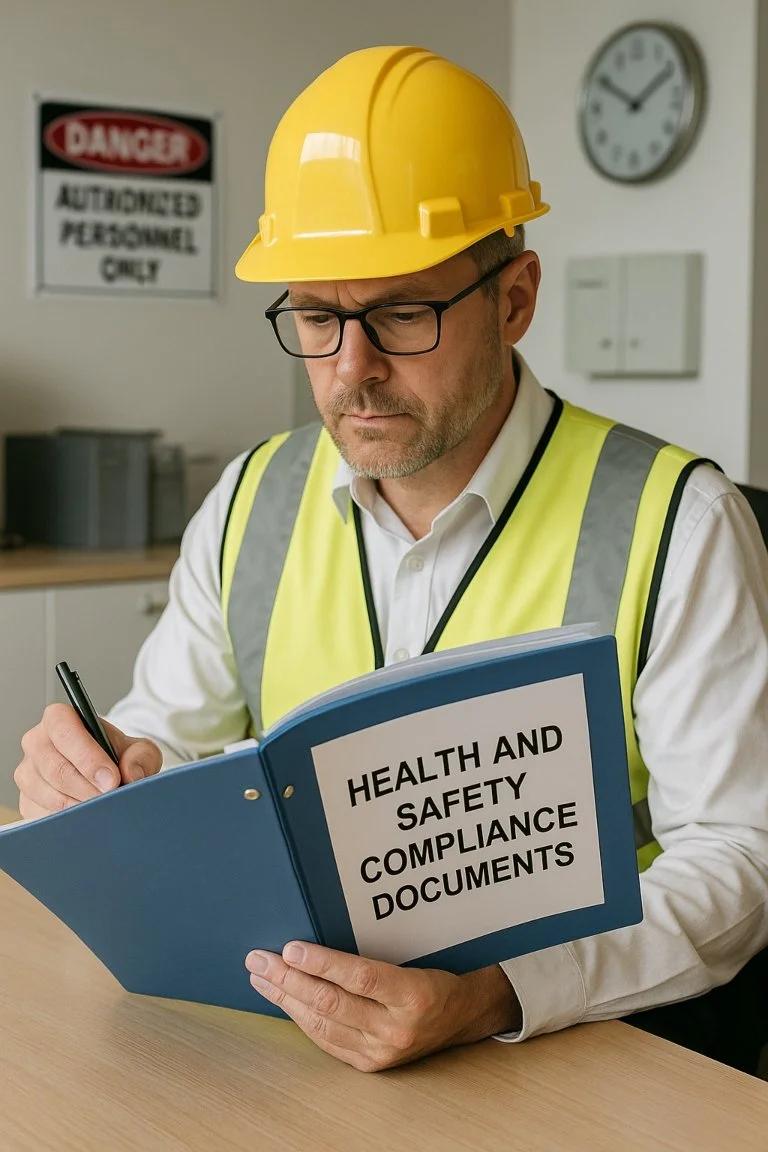
A safety audit is a formal review of your organisation’s entire health and safety management system. Rather than looking at individual hazards, it checks whether your safety processes, policies, and control measures are legally compliant and being followed correctly. For contractors needing to meet industry accreditation standards, professional health and safety audit support for contractors can help ensure documentation and systems meet SSIP and pre-qualification requirements.
If you need a professional audit, our health and safety audit service provides a full review of your safety management system with a prioritised action plan.
What a safety audit includes:
Document and policy review
Site inspections
Staff interviews
Compliance verification
Recommendations for improvement
To learn more about professional audits, visit:
🔗 Health & Safety Audits – Tailored Safety
In simple terms:
A safety audit asks “Are our policies effective, and are we doing what we say we do?”
Risk Assessment vs. Safety Audit — Key Differences
| Aspect | Risk Assessment | Safety Audit |
|---|---|---|
| Primary Purpose | Identify hazards and evaluate risks before they cause harm | Verify whether safety systems, policies, and procedures are being followed |
| Focus | Potential risks and hazards | Compliance and effectiveness of safety management |
| Timing | Proactive and ongoing (before incidents occur) | Periodic or scheduled (after systems are in place) |
| Approach | Analytical and preventive | Evaluative and corrective |
| Scope | Specific tasks, activities, or work areas | Entire workplace or safety management system |
| Conducted By | Supervisors, safety officers, or workers familiar with the job | Internal auditors or external safety professionals |
| Key Question Asked | “What could go wrong and how severe would it be?” | “Are we meeting safety standards and requirements?” |
| Output / Result | Risk register, hazard controls, mitigation actions | Audit report, findings, non-conformities, recommendations |
| Legal Relevance | Often a legal requirement under WHS regulations | Demonstrates due diligence and compliance |
| Frequency | Whenever work changes or new hazards are introduced | At planned intervals (e.g., annually or quarterly) |
| Outcome | Reduced likelihood and severity of incidents | Improved safety performance and accountability |
Although both contribute to a safer workplace, they differ in several important ways:
1. Purpose
Risk Assessment: Identify hazards and reduce risk.
Safety Audit: Evaluate the effectiveness of your safety system.
2. Timing
Risk Assessment: Ongoing and updated when changes occur.
Safety Audit: Periodic (annual or biannual), or before certifications/inspections.
3. Scope
Risk Assessment: Focuses on specific hazards and tasks.
Safety Audit: Reviews the entire safety management structure.
4. Legal Requirement
Risk Assessment: Required by law for all employers.
Safety Audit: Not legally required but strongly recommended.
Why Your Business Needs Both
Relying on one without the other leaves gaps in workplace safety.
Risk assessments help you:
✔ Prevent injuries
✔ Identify hazards early
✔ Stay compliant with regulations
Safety audits help you:
✔ Ensure controls are effective
✔ Identify weaknesses in your system
✔ Prove compliance to insurers and regulators
Together, they provide a complete health and safety picture.
For more details on audits:
🔗 Health & Safety Audits – Tailored Safety
When to Use Each
Risk Assessment:
Before new tasks or changes in the workplace
After incidents or near misses
When new equipment is introduced
When laws or guidance change
Safety Audit:
Annually or biannually
Before external inspection
Improve Your Workplace Safety with Tailored Safety
At Tailored Safety, we provide expert risk assessments, safety audits, fire safety support, and practical guidance to help businesses protect their workforce and stay compliant.
If you're unsure which service your organisation needs, we’ll advise you on the best approach to keep your workplace safe.