
Health and Safety Compliance Checklist for UK Businesses
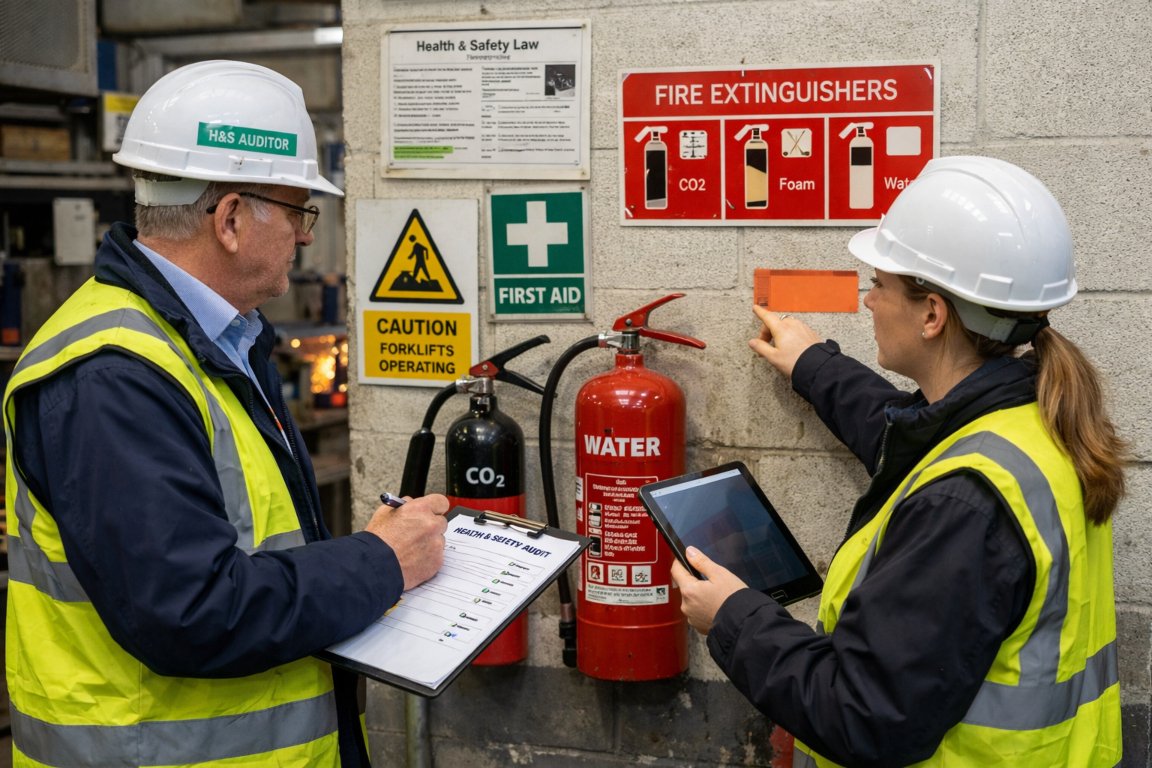
Health and safety compliance is a legal requirement for UK businesses — but it is also essential for protecting employees, reducing risk, and maintaining operational continuity. Whether you are a small business owner or managing multiple sites, having a structured compliance checklist helps ensure your responsibilities are met and your workplace remains safe.
At Tailored Safety Solutions, we help organizations implement practical and compliant health and safety systems that are aligned with UK legislation. Below is a comprehensive health and safety compliance checklist for UK businesses to help you stay compliant and audit-ready.
1. Written Health & Safety Policy
If you employ five or more people, UK law requires a written Health & Safety Policy. This document should clearly outline:
Your commitment to health and safety
Roles and responsibilities
Arrangements for managing workplace risks
A well-structured policy forms the foundation of your safety management system. Professional support from Tailored Safety Solutions ensures your policy is legally compliant and tailored to your business activities.
If you employ five or more people, you need a written health and safety policy. Our policies and handbooks service can create one for you.
2. Risk Assessments and Method Statements
Risk assessments are at the core of health and safety compliance. They identify hazards, assess who may be harmed, and define control measures to reduce risk.
For higher-risk activities, method statements are essential to demonstrate safe systems of work. Keeping documentation reviewed and up to date shows active risk management and compliance with UK regulations.
Businesses seeking guidance on health and safety compliance checklist requirements often benefit from expert input to ensure assessments are suitable and sufficient.
Need help writing your risk assessments? Our risk assessments and method statements service provides tailored, compliant documentation for any business or trade.
3. Fire Safety Arrangements
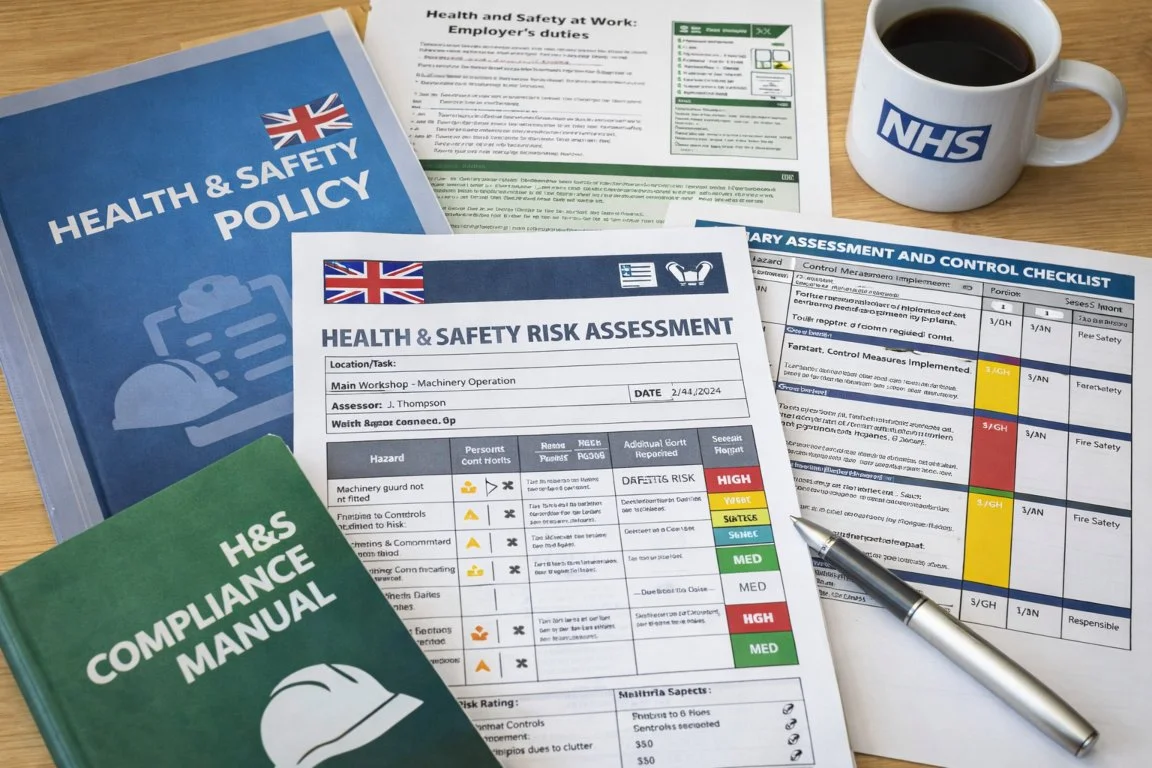
Every UK workplace must have suitable fire safety measures in place. This includes a fire risk assessment, maintained fire equipment, clear escape routes, and staff awareness of emergency procedures.
Fire safety arrangements should be reviewed regularly, particularly when layouts, occupancy levels, or activities change.
Ensuring compliance with fire safety legislation is essential for all UK businesses, including conducting proper fire risk assessments for small businesses to meet legal requirements and protect staff and premises.
Every UK business needs a fire risk assessment. Find out more about our fire risk assessment service or read why fire risk assessments are a legal requirement.
4. Training and Competence
Employees must be competent to carry out their work safely. This includes:
Health and safety inductions
Task-specific training
Supervisor and management training
Refresher training where required
Maintaining accurate training records demonstrates that reasonable steps have been taken to protect employees and visitors.
5. Inspections, Audits, and Monitoring
Routine inspections and audits help confirm that safety controls are effective. Monitoring performance allows issues to be identified early and corrective action to be taken before incidents occur.
Many organizations rely on health and safety support for UK businesses to maintain objective, compliant audit processes.
Businesses working with contractors or bidding for projects may require SSIP and pre-qualification audit support to demonstrate compliance with health and safety standards.
6. Incident Reporting and Investigation
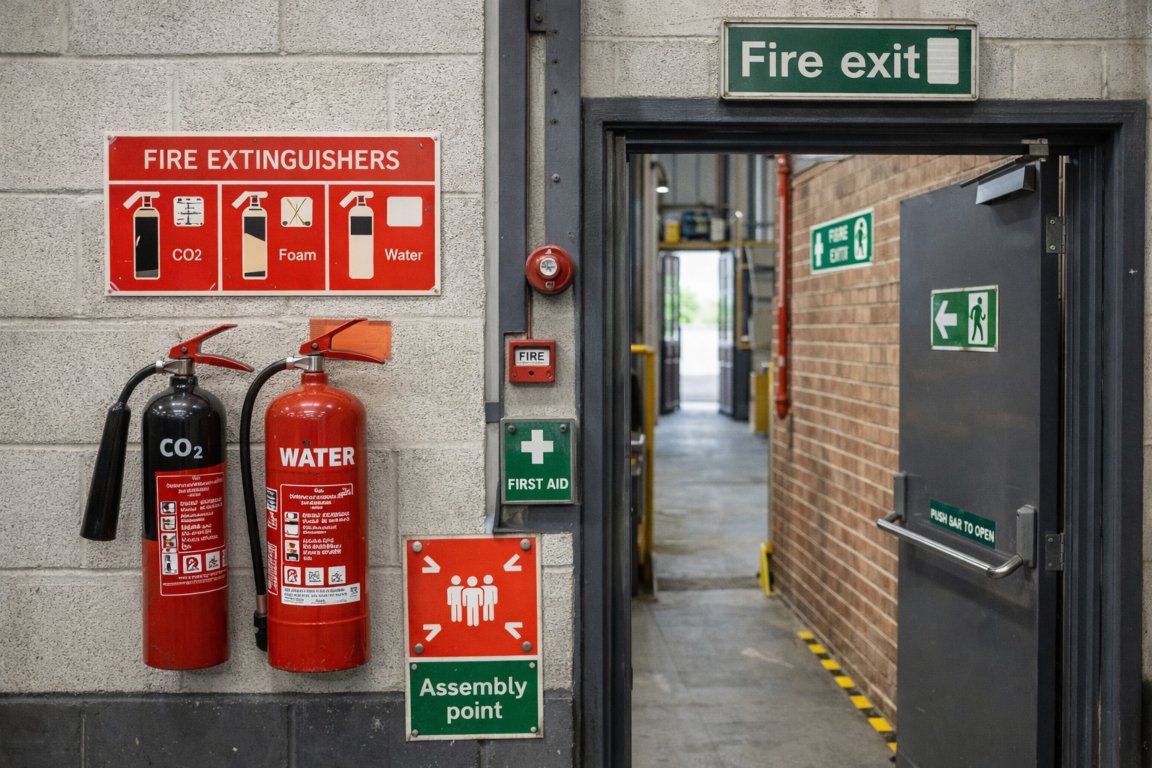
A clear reporting system should be in place for accidents, near misses, and dangerous occurrences. Investigations should focus on root causes and preventative action rather than blame.
Where required, incidents must be reported under UK regulations and records retained appropriately.
7. Emergency Procedures and First Aid
All workplaces must have documented emergency procedures, including evacuation plans, trained first aiders, and appropriate welfare facilities.
Emergency arrangements should be communicated clearly and reviewed regularly to ensure effectiveness.
8. PPE, Equipment, and Signage
Appropriate PPE, safety signage, and maintained equipment help control workplace risks. PPE should be suitable for the task, properly stored, and replaced when worn or damaged.
Regular inspections ensure ongoing protection and compliance.
Maintaining Ongoing Compliance
Health and safety compliance is not a one-off exercise. As legislation evolves and businesses change, systems must be reviewed and updated. Ongoing reviews help reduce enforcement risk and demonstrate proactive management.
If you want expert guidance, learn more here about how tailored health and safety support can help keep your business compliant.
Health and Safety Compliance Support for UK Businesses
Following this health and safety compliance checklist helps UK businesses meet their legal obligations, protect employees, and reduce operational risk. Strong policies, effective risk assessments, regular training, and ongoing monitoring are essential to maintaining a safe and compliant workplace.
Want a professional review of your current compliance? Book a health and safety audit and get a clear action plan.
With expert guidance from Tailored Safety Solutions, businesses can implement practical, legally compliant health and safety systems that stand up to inspections and audits — while supporting long-term operational success.
