
RAMS vs. Risk Assessments — What’s the Difference?
In health and safety management, few documents are as commonly discussed — and as frequently confused — as RAMS and Risk Assessments. While they are closely related, they serve different purposes and are often required at different stages of a project.
If you already know what you need, you can request a quote for our professional RAMS and risk assessment service — we write tailored documents for contractors and businesses across the UK.
Understanding the difference between the two is essential for employers, contractors, and duty holders who need to meet UK health and safety requirements and demonstrate compliance.
What Is a Risk Assessment?
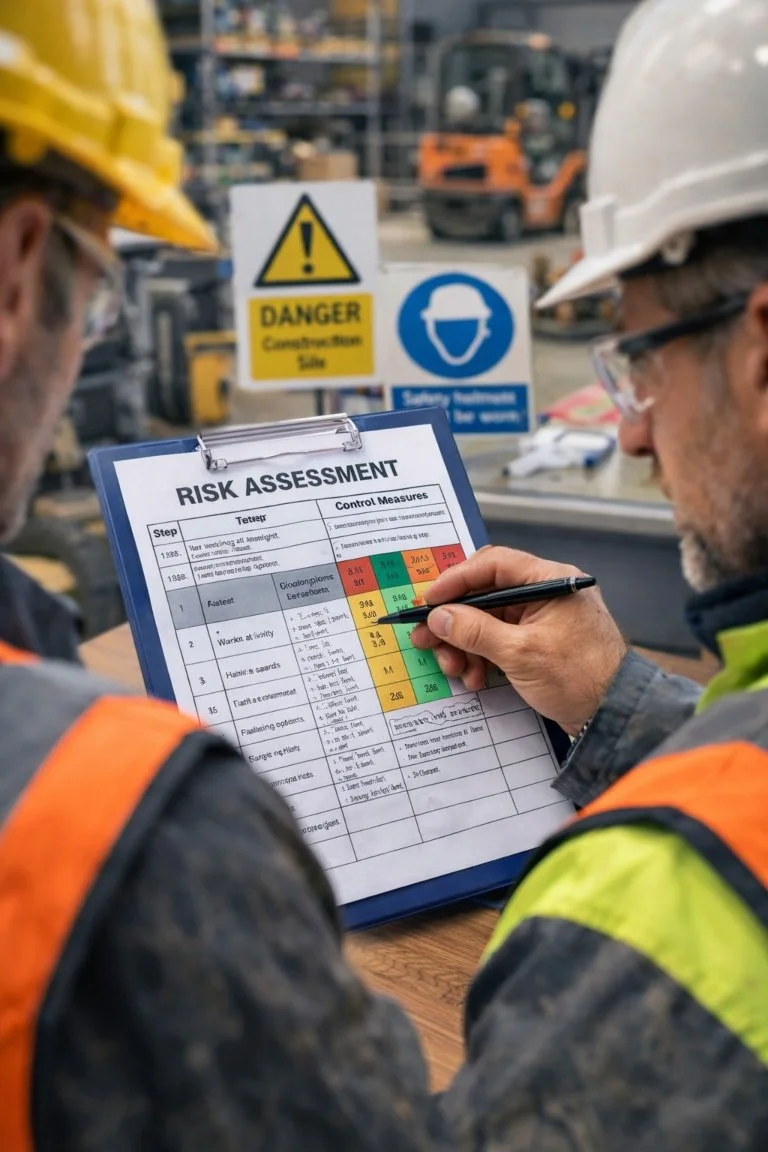
A Risk Assessment is a structured process used to identify hazards, assess risks, and determine appropriate control measures. It focuses on what could cause harm, who might be affected, and how the risk can be reduced.
Risk assessments are a legal requirement under the Management of Health and Safety at Work Regulations 1999 and apply to all workplaces. They are often high-level documents that outline general hazards associated with a task, activity, or environment.
Typical risk assessments:
Identify hazards and potential consequences
Evaluate likelihood and severity
Define control measures
Are reviewed regularly or when conditions change
What Are RAMS?
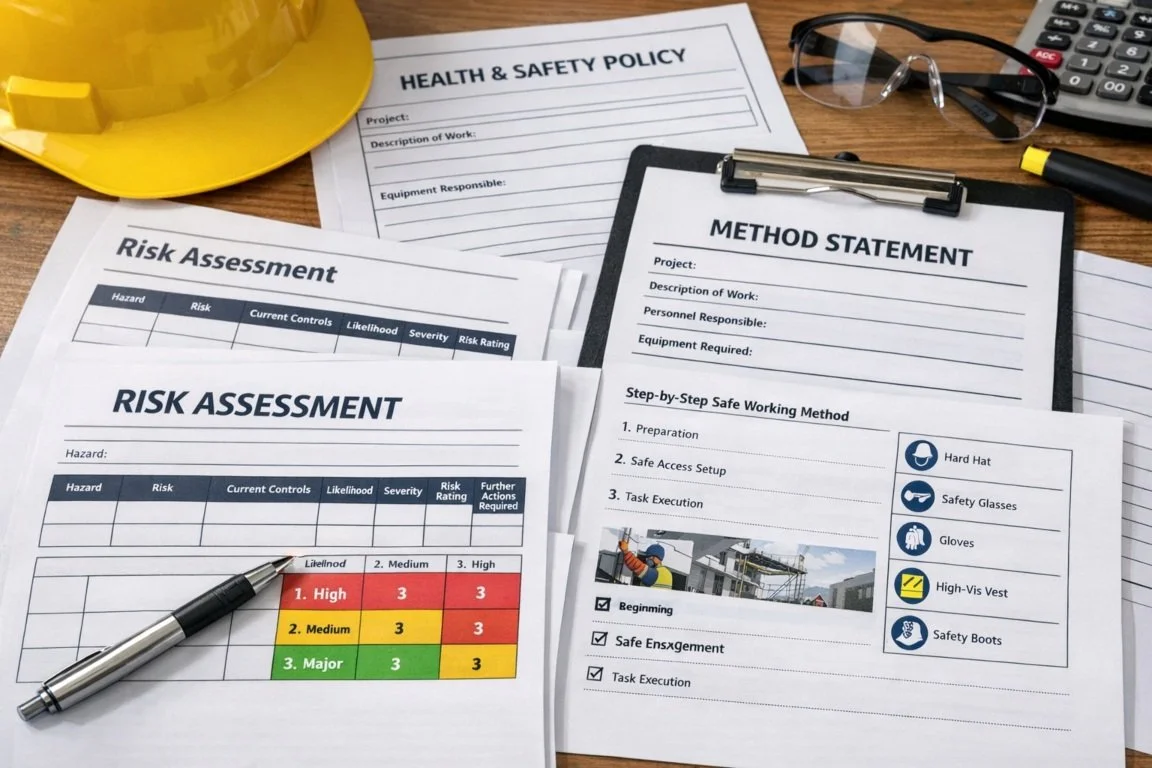
RAMS stands for Risk Assessments and Method Statements. While the risk assessment identifies hazards, the method statement explains the step-by-step process for completing the work safely.
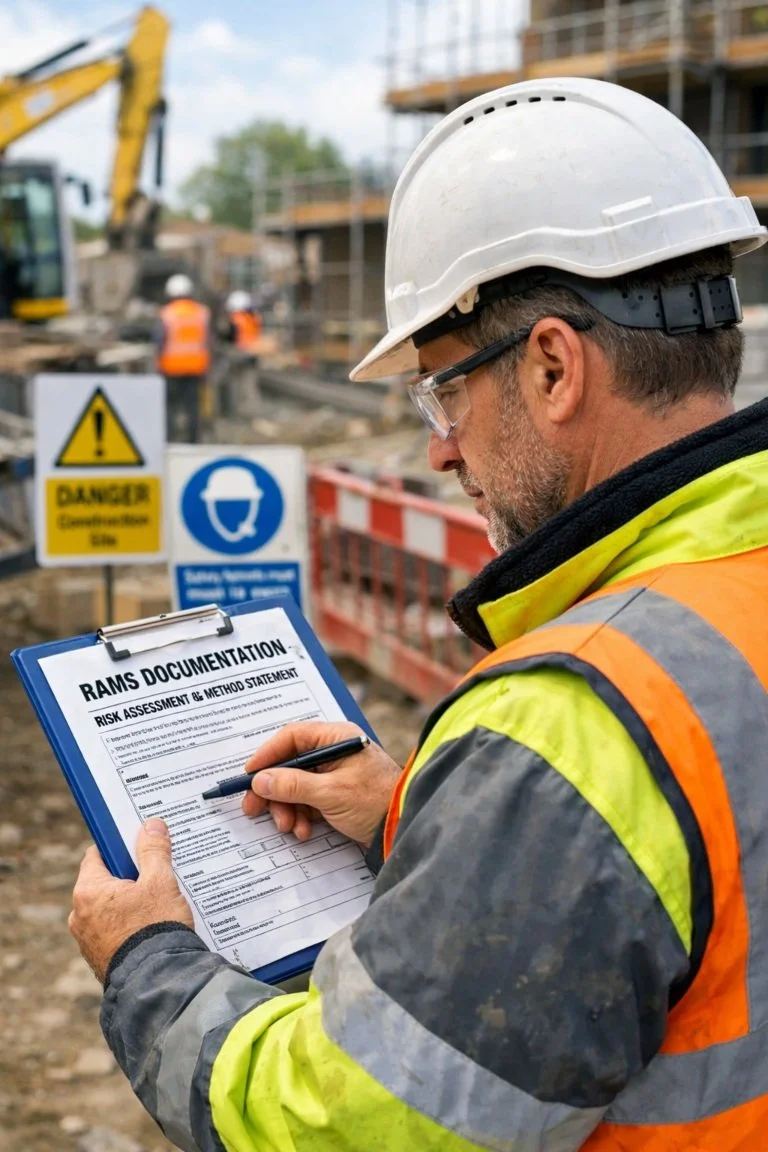
RAMS are commonly required for higher-risk activities such as construction, maintenance, engineering works, and contractor-led projects. They provide both clients and site managers with reassurance that the work has been properly planned.
A RAMS document typically includes:
Task-specific risk assessments
Detailed method statements
Roles and responsibilities
Equipment and PPE requirements
Emergency procedures
For many organisations, having professionally written RAMS is essential for meeting client expectations and gaining site approval. You can learn more about professionally prepared RAMS risk assessments and method statements and when they’re required.
Key Differences Between RAMS and Risk Assessments
While they work together, RAMS and risk assessments are not the same:
Risk Assessments identify hazards and risks
Method Statements explain how the work will be done safely
RAMS combine both into a single, task-specific document
In simple terms, risk assessments answer “What could go wrong?” while method statements answer “How will we do the job safely?”
When Do You Need RAMS?
You may need RAMS when:
Working as a contractor on client sites
Carrying out high-risk or complex tasks
Submitting documentation for site approval
Demonstrating compliance with CDM regulations
Many clients now require RAMS as standard before work can begin. Having clear, compliant documentation helps prevent delays and reduces the risk of incidents on site. Tailored Safety provides expert support for businesses needing risk assessments and method statements that meet current UK legislation and industry standards.
Ready to get your RAMS sorted? Contact our team for a quote, or read our guide on how to write effective RAMS for construction and maintenance work.
Why Getting It Right Matters
Incorrect or poorly written safety documentation can lead to:
Site access being refused
Increased accident risk
Non-compliance with legal duties
Enforcement action from regulators
By understanding the difference between RAMS and risk assessments — and using each correctly — businesses can protect their workforce, meet legal obligations, and operate more efficiently.
For a practical walkthrough, see our guide on how to conduct a risk assessment for your business, complete with examples.
