
5 Common Fire Safety Failures Found in UK Workplaces
Fire safety remains one of the most frequently overlooked areas of workplace compliance in the UK. Despite clear legal duties under the Regulatory Reform (Fire Safety) Order 2005, many businesses still fall short — often without realising the risks they’re exposing staff, visitors, and their operations to.
Based on common inspection findings, here are five of the most common fire safety failures found in UK workplaces, and how they can be avoided.
1. No Fire Risk Assessment — or an Outdated One
The most serious and widespread failure is the absence of a suitable and sufficient fire risk assessment, or relying on one that is no longer valid.
Workplaces change constantly — staff numbers, layouts, equipment, and processes all impact fire risk. If these changes are not reviewed, your assessment quickly becomes ineffective and non-compliant.
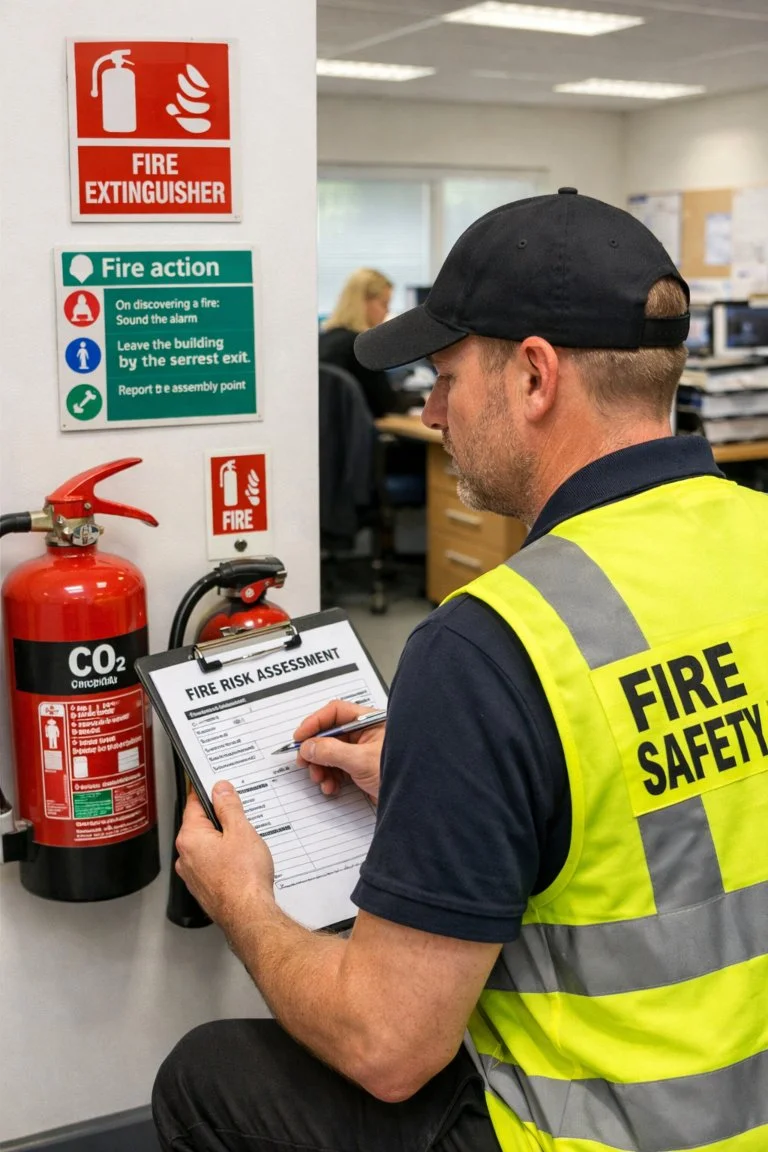
A professional fire risk assessment carried out by Tailored Safety Solutions helps identify hazards, reduce risks, and ensure your business meets its legal obligations.
Fire risk assessments are a legal requirement under the Fire Safety Order. Read our guide on why fire risk assessments are a legal requirement for UK businesses.
2. Blocked or Poorly Maintained Escape Routes
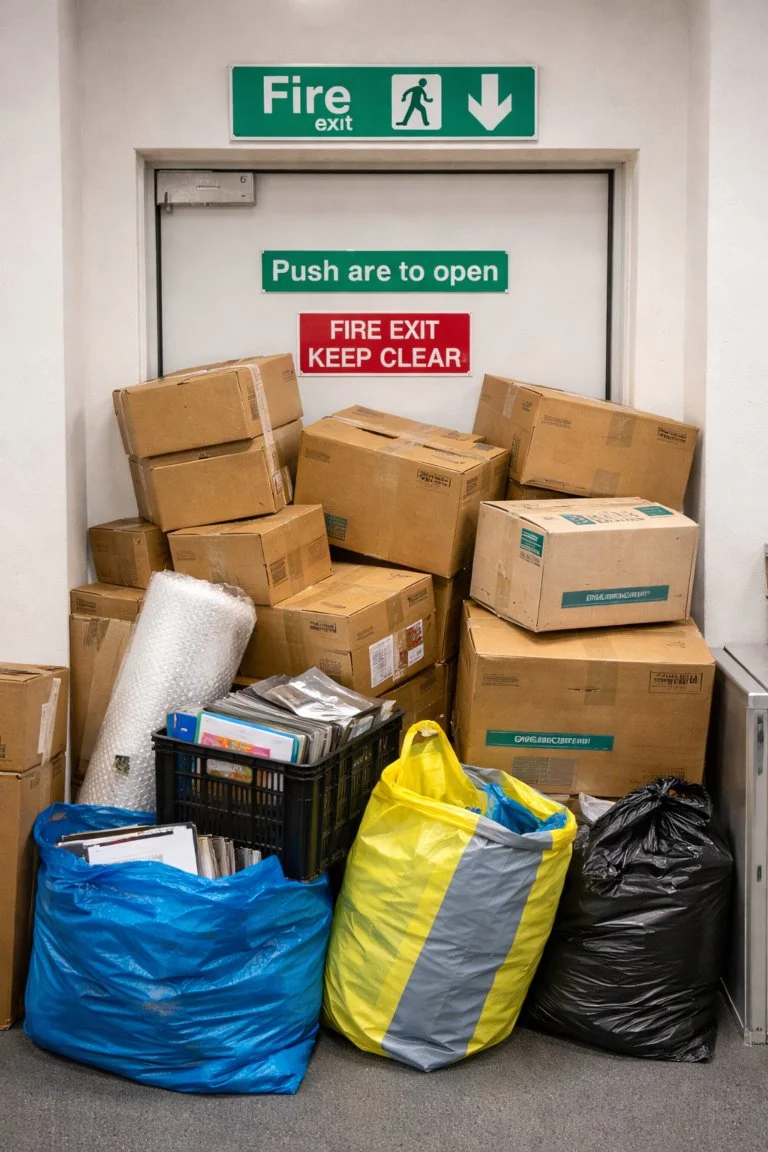
Blocked fire exits and cluttered escape routes are still found far too often during workplace inspections.
Common causes include:
Stored materials in corridors
Locked or obstructed fire doors
Poor signage or lighting
In an emergency, even a few seconds of delay can lead to serious injury or worse. Escape routes must be kept clear at all times and checked regularly as part of ongoing fire safety management.
3. Inadequate Fire Safety Training for Employees
Fire safety procedures are only effective if employees understand them.
Many UK workplaces fail to provide:
Regular fire safety training
Clear evacuation procedures
Fire warden or responsible person instruction
Without proper training, staff may panic, misuse equipment, or fail to evacuate safely. Training should be refreshed periodically and whenever workplace conditions change.
4. Poor Maintenance of Fire Safety Equipment
Fire alarms, extinguishers, emergency lighting, and detection systems must be properly installed and maintained.
Common issues include:
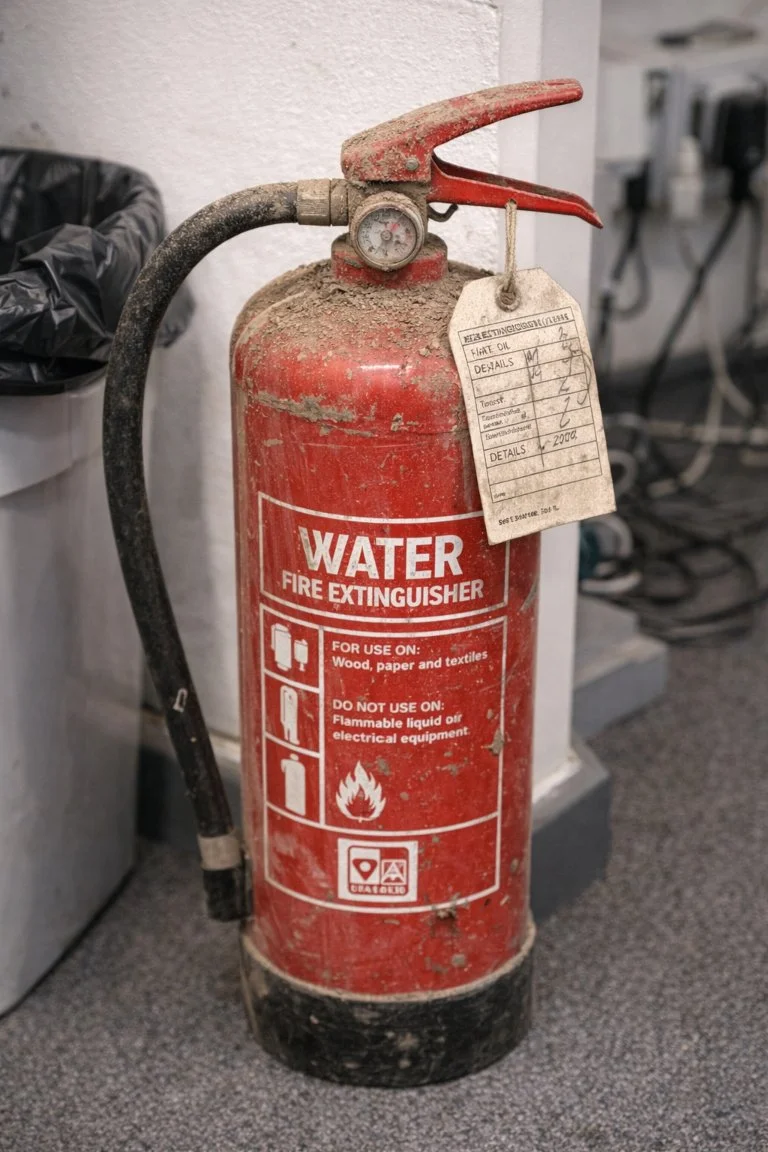
Expired or unserviced fire extinguishers
Faulty alarm systems
Emergency lighting failures
Routine inspections and servicing are essential to ensure systems operate effectively during an emergency.
5. Poor Housekeeping and Increased Fire Hazards
Poor housekeeping significantly increases fire risk and is frequently identified during assessments.
Typical hazards include:
Combustible waste build-up
Overloaded electrical sockets
Flammable materials stored near heat sources
Good housekeeping is one of the simplest and most cost-effective ways to reduce fire risk and improve overall workplace safety.
Why Fire Safety Failures Matter
Fire safety failures don’t just put lives at risk — they can lead to enforcement action, fines, business disruption, and reputational damage.
Regular reviews and professional support help businesses remain compliant and confident in their fire safety arrangements. If you’d like to understand what’s required for your premises, you can find out more here about professional workplace fire risk assessments.
Conducting a thorough fire risk assessment for small businesses helps identify hazards early, ensure control measures remain effective, and demonstrate compliance with fire safety legislation before enforcement action becomes a risk.
Stay Compliant. Stay Safe.
If you’re unsure whether your workplace meets current fire safety requirements, now is the time to act. Fire risks evolve — and your fire safety approach should evolve with them.
Do not wait for an inspector to find these issues. Book a professional fire risk assessment and get a clear action plan.
