
How to Conduct a Risk Assessment for Your Business (With Examples)
Conducting a risk assessment is one of the most important steps any business can take to protect employees, visitors, and contractors. Whether you operate an office, warehouse, construction site, or retail premises, identifying and managing workplace risks is a legal requirement under UK health and safety law.
Need a professional to handle your risk assessments? Our risk assessments and method statements service provides tailored documentation for any business.
In this guide, we explain how to conduct a risk assessment for your business, step by step, with clear examples to help you apply the process in real-world situations.
What Is a Risk Assessment in Health and Safety?
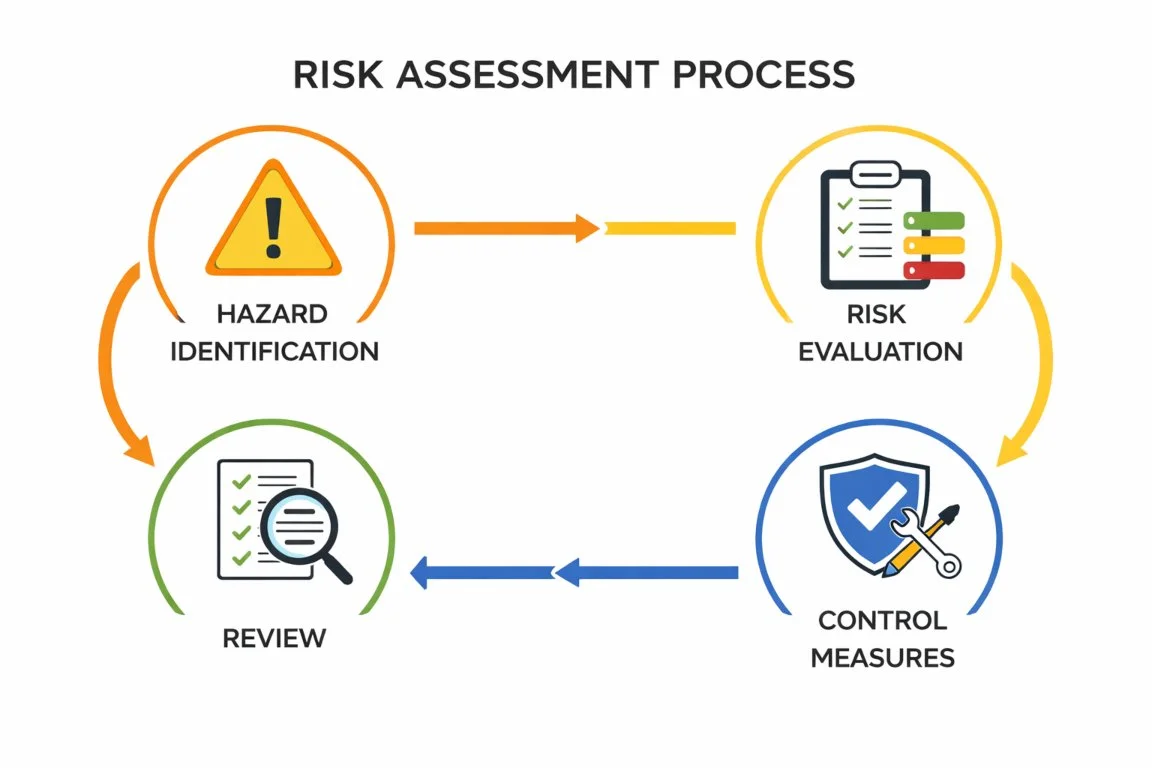
A health and safety risk assessment is a structured process used to identify workplace hazards, assess the level of risk they pose, and implement appropriate control measures.
The objective is not to eliminate all risk, but to reduce risks as far as reasonably practicable, in line with the Health and Safety at Work etc. Act 1974 and HSE guidance.
Why Risk Assessments Are Essential for UK Businesses
Carrying out regular risk assessments helps your business to:
Comply with UK health and safety legislation
Prevent workplace accidents and occupational ill health
Protect employees, customers, and visitors
Reduce downtime, claims, and enforcement action
Demonstrate due diligence
Many organizations choose to validate their risk management systems through independent health and safety audits. A professional review ensures risk assessments are suitable, sufficient, and properly implemented. You can find out more about health and safety audits
How to Conduct a Risk Assessment: Step-by-Step
1. Identify Workplace Hazards
Identify anything in your workplace that could cause harm, including:
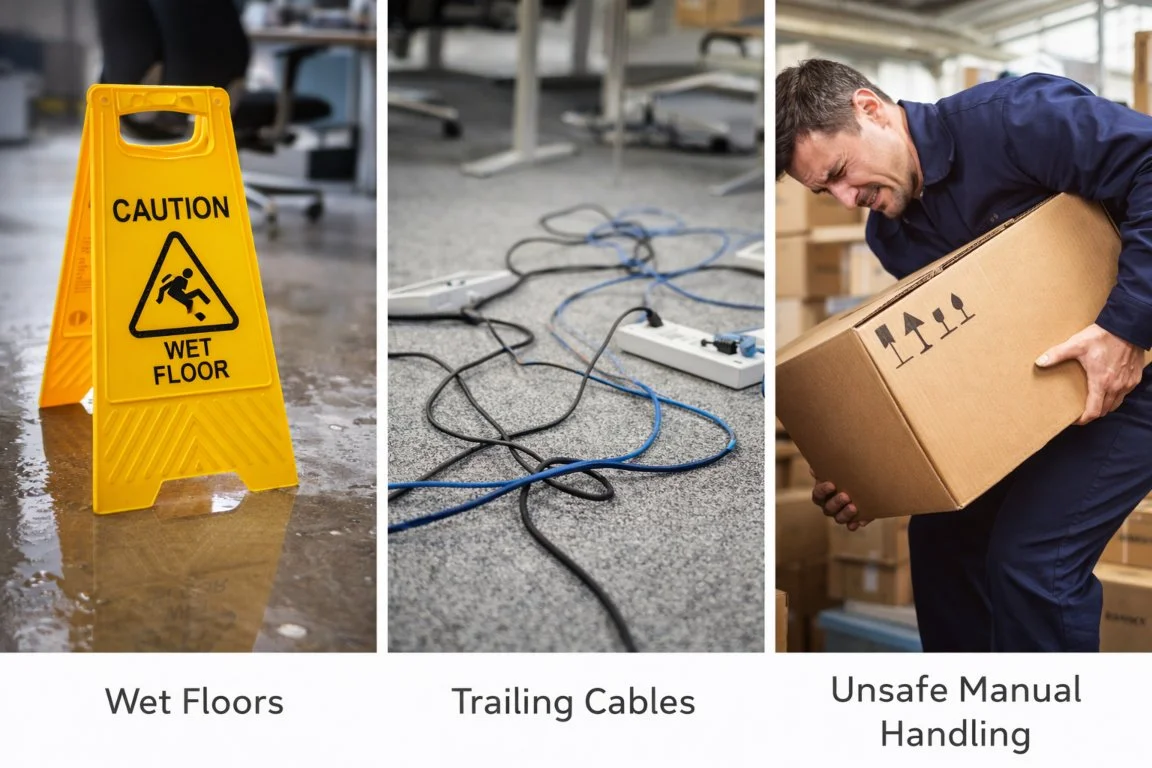
Slips, trips, and falls
Manual handling activities
Machinery and equipment
Hazardous substances
Fire risks
Stress and ergonomic hazards
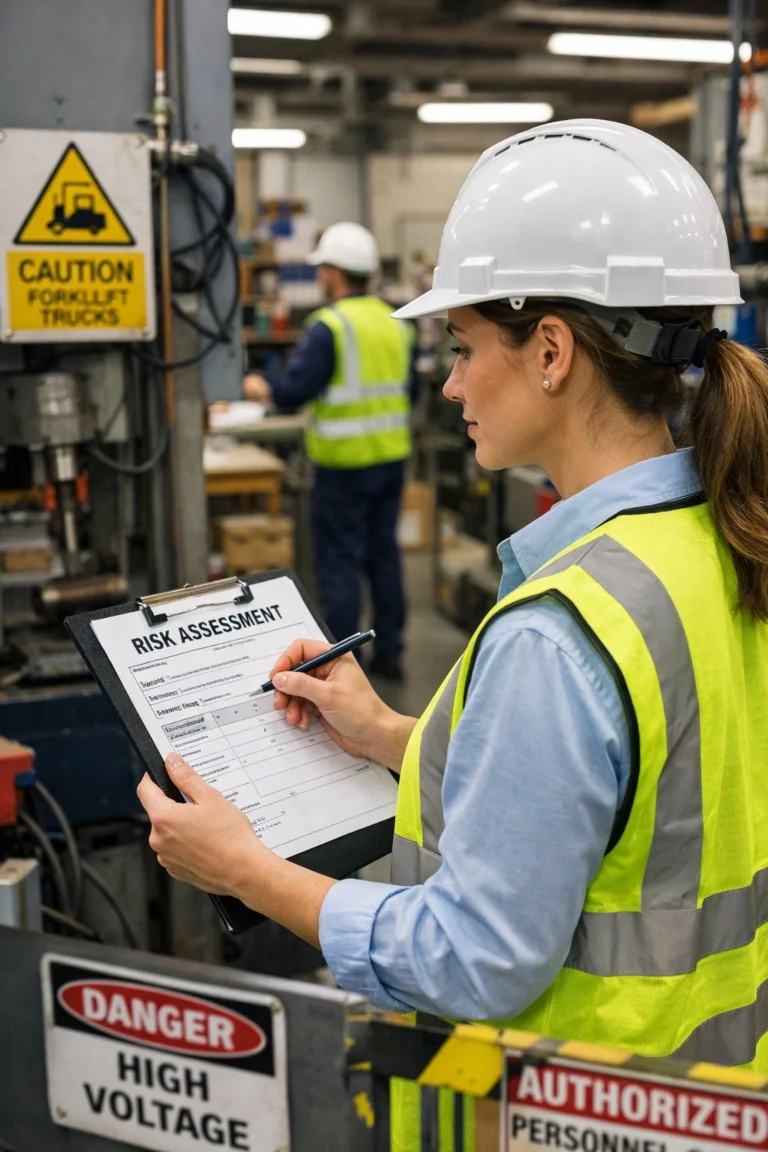
Regular workplace inspections and formal reviews — such as those carried out by Tailored Safety Solutions — help ensure hazards are not overlooked. Many businesses use Tailored Safety Solutions’ audit services to confirm their assessments reflect real-world conditions. For higher-risk or contractor-led projects, businesses may benefit from outsourced RAMS support for contractors to ensure documentation meets legal requirements and site-specific standards.
If your business has five or more employees, your risk assessments must be written down as part of your health and safety policy. Our policies and handbooks service can help.
2. Decide Who Might Be Harmed and How
Consider who could be affected by each hazard:
Employees
Contractors
Visitors or customers
Vulnerable workers (young persons, new starters)
Example: In a warehouse, poor manual handling practices could result in musculoskeletal injuries.
3. Evaluate the Risks and Implement Controls
Assess the likelihood and severity of harm, then apply controls using the hierarchy of control:
Eliminate
Substitute
Engineering controls
Administrative controls
Personal protective equipment (PPE)
Example: Introducing lifting aids and task rotation reduces manual handling risks more effectively than PPE alone.
If you are unsure whether your controls are adequate, a workplace health and safety audit can help identify gaps and improvement areas.
4. Record Your Findings
If you employ five or more people, your findings must be documented. Records should include:
Identified hazards
Who is at risk
Control measures
Further actions required
Review dates
These records are frequently reviewed during health and safety audits, insurance assessments, and HSE inspections.
5. Review and Update Regularly
Risk assessments should be reviewed:
At least annually
After accidents or near-misses
When equipment or work activities change
Many businesses choose a health and safety audit service to ensure their assessments remain current, legally compliant, and aligned with best practice.
Office Risk Assessment Example
Hazard: Poor workstation ergonomics
Risk: Musculoskeletal disorders
Controls: DSE assessments, adjustable seating, staff training
Retail Risk Assessment Example
Hazard: Wet floors
Risk: Slips and falls
Controls: Anti-slip mats, signage, cleaning schedules
Workshop Risk Assessment Example
Hazard: Excessive machinery noise
Risk: Hearing damage
Controls: Noise assessments, hearing protection, maintenance
Many businesses formalise their findings into structured risk assessments and method statements to clearly document hazards, control measures, and safe systems of work.
See our visual step-by-step risk assessment diagram for a quick summary of the whole process.
Risk Assessments: A Foundation for Safer, Compliant Workplaces
A well-managed risk assessment process plays a vital role in protecting people, reducing incidents, and ensuring compliance with UK health and safety legislation. By identifying hazards, implementing proportionate control measures, and reviewing assessments regularly, businesses can create safer, more productive working environments.
Risk assessments should never be treated as a one-off exercise. Ongoing reviews, employee involvement, and independent verification help ensure they remain effective as your business evolves.
For additional reassurance, many organizations choose to work with Tailored Safety Solutions to independently review their risk assessments and overall safety management systems, helping them stay compliant, confident, and protected.
