
CDM Compliance Checklist for Construction Projects
Ensuring compliance with the Construction (Design and Management) Regulations 2015 (CDM 2015) is essential for any construction project in the UK. Whether you're a principal contractor, designer, or client, meeting CDM requirements not only improves safety but also promotes efficiency and legal compliance from start to finish.
At Tailored Safety Solutions, we support construction professionals with practical, compliant health and safety solutions that align with real-world site conditions.
Understanding CDM Compliance
CDM 2015 places legal duties on those who plan, manage, and carry out construction work. The regulations are designed to improve health and safety outcomes by encouraging early planning, clear accountability, and effective communication throughout the project lifecycle.
Using a structured CDM compliance checklist helps ensure nothing is overlooked — reducing risk, improving site safety, and keeping your project legally compliant.
1. Identify CDM Duty Holders
Before construction begins, all CDM roles must be clearly identified and appointed where required:
Client – Responsible for making suitable arrangements for managing the project
Principal Designer – Plans, manages, and coordinates health and safety during pre-construction
Principal Contractor – Manages health and safety during the construction phase
Designers and Contractors – Must eliminate, reduce, or control foreseeable risks
If you’re unsure who should take on which role, professional guidance can help ensure duties are correctly assigned from the outset. Tailored Safety Solutions can provide clear, proportionate CDM advice.
2. Prepare Pre-Construction Information (PCI)
Pre-Construction Information must be gathered and shared before work starts. This should include:
Existing site hazards
Surveys and reports
Health and safety constraints
Environmental considerations
Project timelines and sequencing
Providing accurate PCI allows designers and contractors to plan work safely and efficiently.
3. Create a Construction Phase Plan (CPP)
Every construction project requires a Construction Phase Plan. This document explains how health and safety will be managed on site and should cover:
Site rules and access arrangements
Risk control measures
Emergency procedures
Welfare facilities
Site supervision and monitoring
The CPP must be in place before construction work begins and kept up to date as the project progresses.
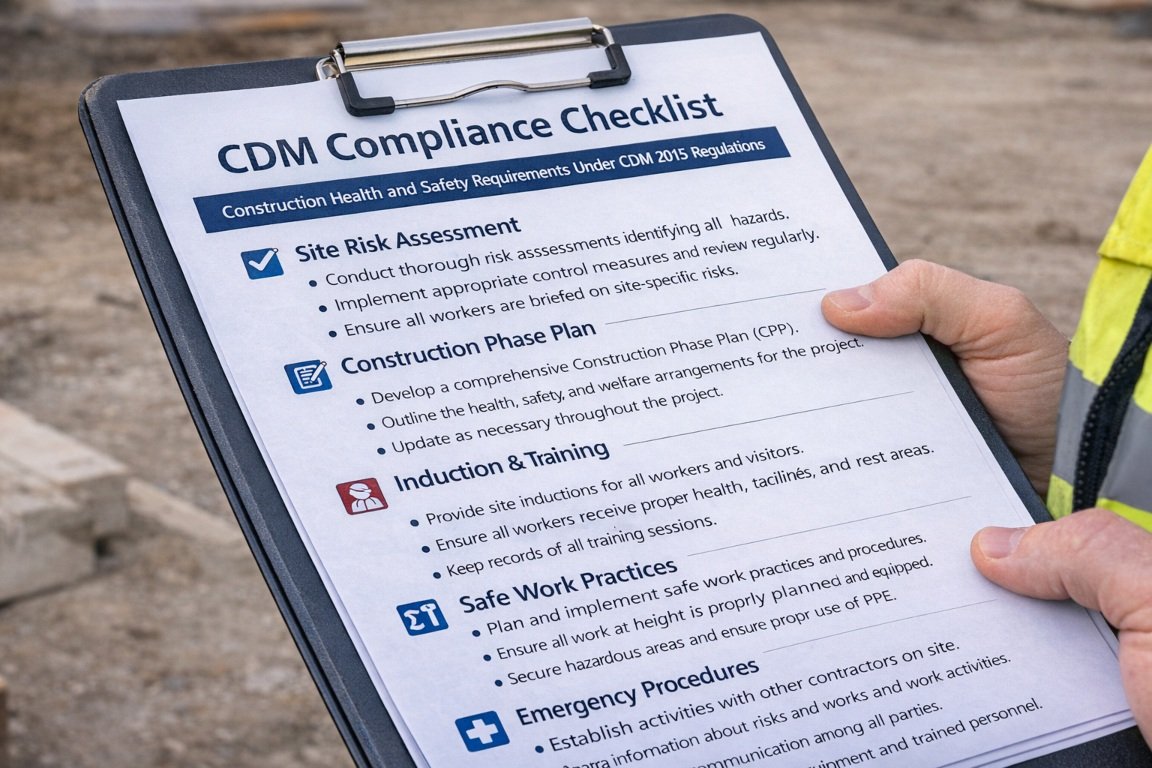
4. Risk Assessments & Method Statements (RAMS)
Risk Assessments and Method Statements are fundamental to CDM compliance. Effective RAMS should be:
Task-specific
Clearly written and easy to understand
Communicated to all relevant workers
Reviewed regularly and updated when site conditions change
Generic or outdated RAMS can increase risk and undermine compliance.
Need compliant RAMS for your construction project? Our risk assessments and method statements service covers everything from task-specific assessments to full RAMS packs.
5. Site Inductions and Training
All workers must receive a suitable site induction that covers:
Site rules and procedures
Emergency arrangements
Key hazards and control measures
Welfare facilities
Ensure operatives are competent, trained, and qualified for the tasks they are undertaking.
6. Ongoing Monitoring and Communication
CDM compliance is an ongoing responsibility. During the project you should:
Conduct regular site inspections
Review risk controls
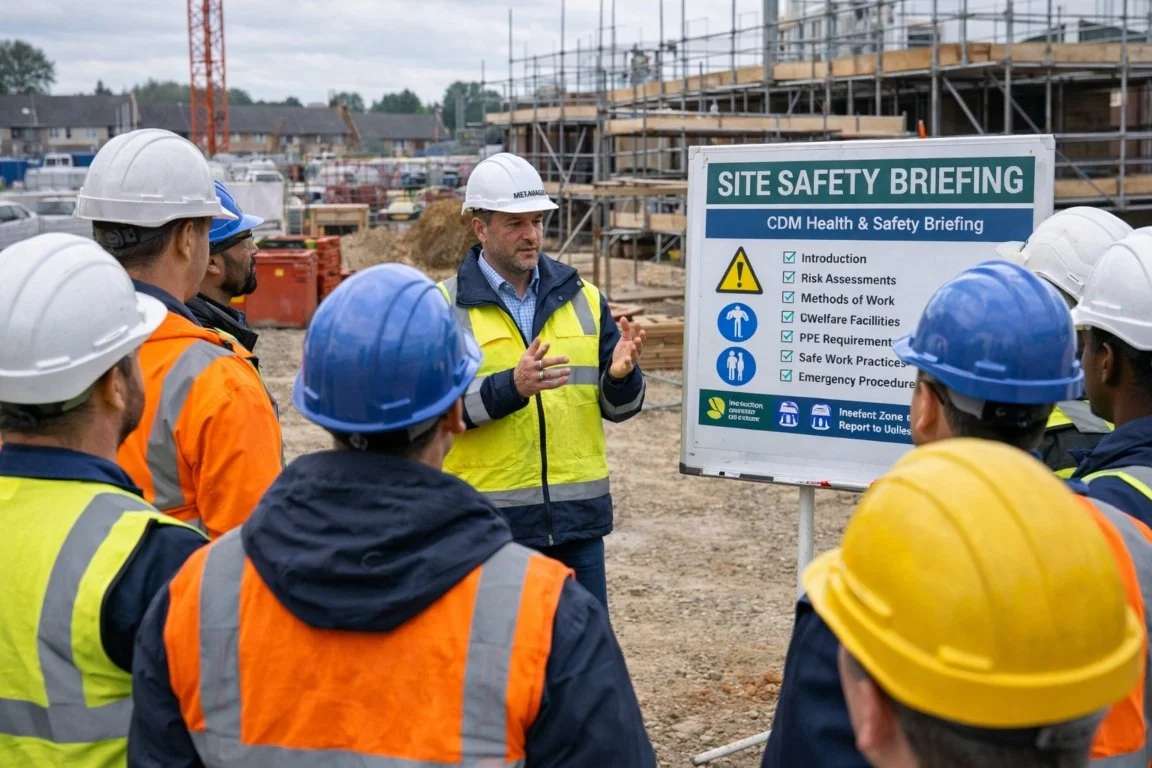
Deliver toolbox talks and safety briefings
Encourage cooperation and communication between all parties
Proactive monitoring helps prevent incidents and demonstrates effective management.
7. Maintain Records and the Health & Safety File
Accurate documentation is essential. Records should include:
RAMS
Training and induction records
Site inspections
Incident reports
Design changes
The Health and Safety File must be completed and handed to the client at project completion for future maintenance and works.
Get Support with CDM Compliance
Managing CDM duties alongside operational pressures can be challenging. Working with competent health and safety professionals helps ensure compliance without unnecessary complexity.
For a broader overview of CDM duties, read our guide on understanding CDM Regulations for contractors and clients.
If you need support with CDM services, Construction Phase Plans, RAMS, or ongoing site safety management, get in touch with our team to discuss how Tailored Safety Solutions can support your project.
