
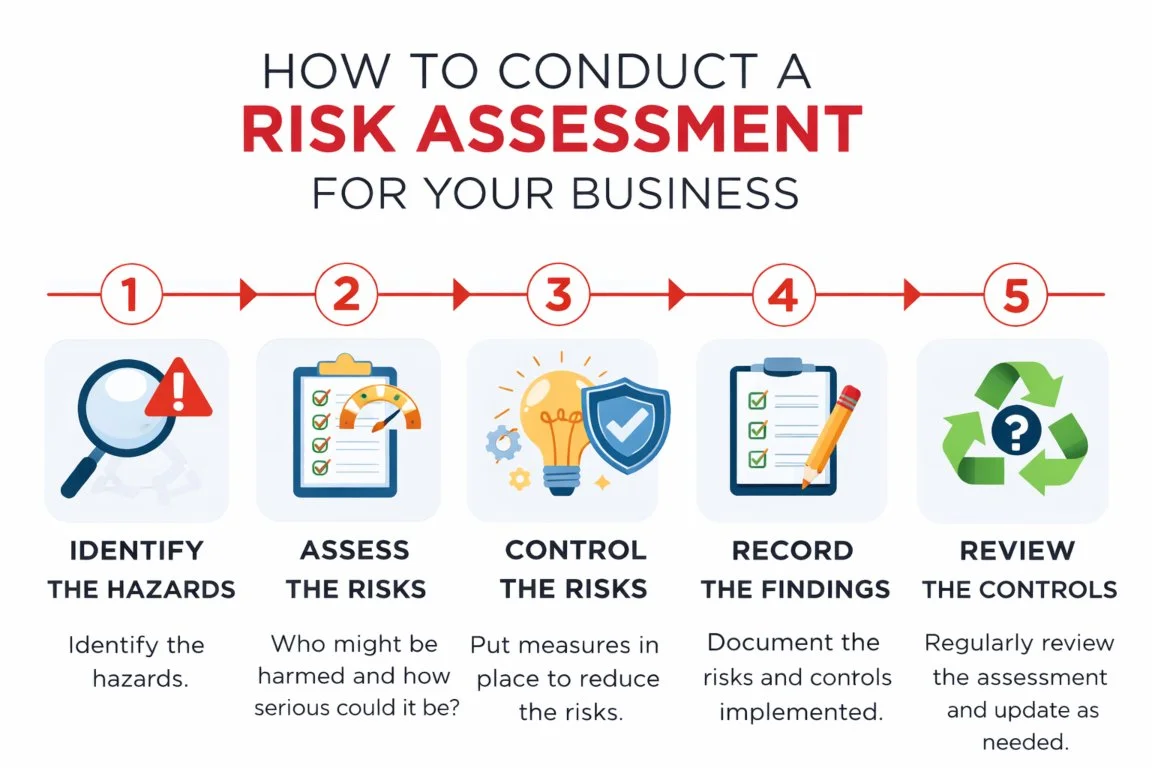
Step-by-step diagram explaining how to conduct a risk assessment for a business
What Is a Workplace Risk Assessment?
A workplace risk assessment is a structured process used to identify hazards, assess potential risks, and implement control measures to reduce the likelihood of harm. UK businesses are legally required to carry out risk assessments under the Health and Safety at Work etc. Act 1974.
Risk assessments should always be practical, proportionate, and tailored to your specific working environment.
For a full written guide with practical examples, read our detailed article on how to conduct a risk assessment for your business.
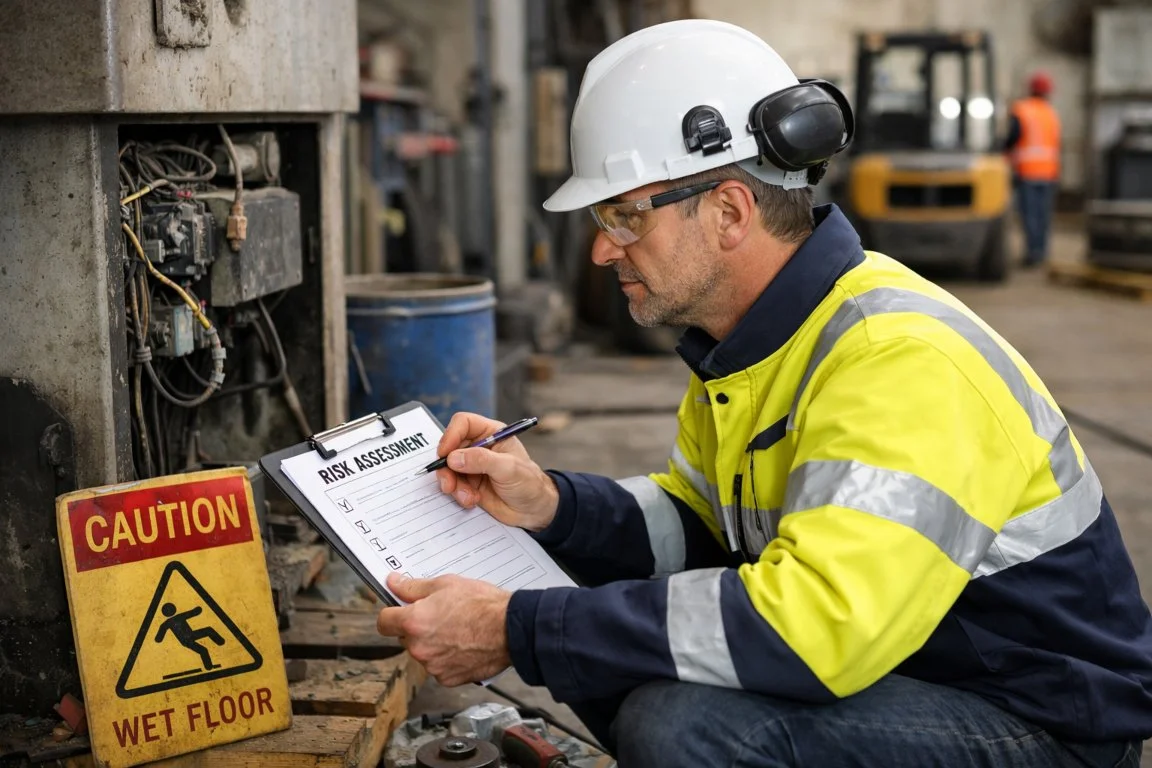
Why Risk Assessments Are Essential for Businesses
Regular risk assessments help your business to:
Protect employees, customers, and visitors
Meet legal health and safety obligations
Reduce accidents and workplace injuries
Improve productivity and staff morale
Avoid enforcement action and fines
Many organizations also use independent reviews to validate their approach, such as professional health and safety audits conducted by experienced consultants.
How to Conduct a Risk Assessment: Step-by-Step
1. Identify Workplace Hazards
Begin by identifying anything in your workplace that could cause harm, including slips, trips, falls, manual handling activities, faulty equipment, or exposure to hazardous substances. Involving employees at this stage is essential, as they are often best placed to highlight risks.
2. Decide Who Might Be Harmed and How
Consider everyone who could be affected, including employees, contractors, visitors, temporary workers, and vulnerable individuals. This ensures your control measures are suitable for all groups.
3. Evaluate Risks and Implement Controls
Assess how likely each hazard is to cause harm and how severe the outcome could be. Apply control measures using the hierarchy of control wherever possible.
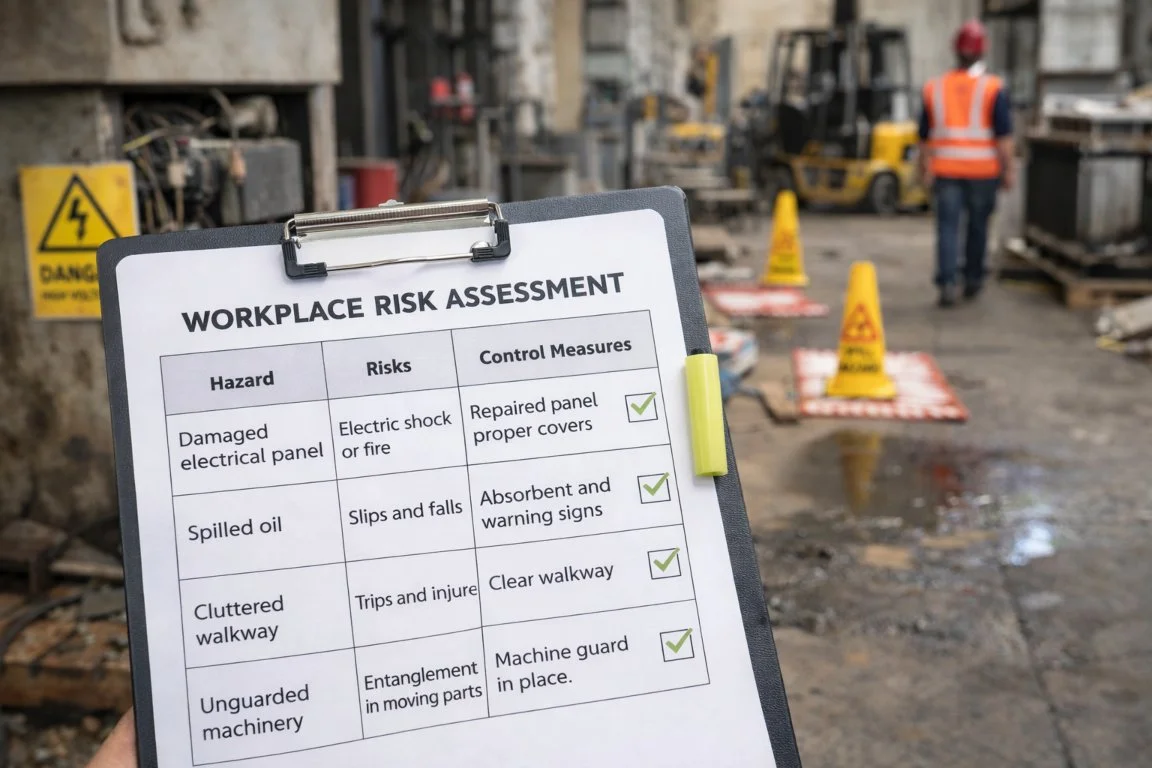
Example:
Hazard: Uneven flooring in a stockroom
Risk: Trips and falls
Control measures: Repair flooring, add non-slip surfaces, and install warning signage
Once hazards and control measures have been identified, the next challenge is turning your findings into clear, site-ready documentation that teams can follow. If time or competence is a concern—especially for higher-risk work—outsourcing RAMS and risk assessments can help ensure your documentation is accurate, compliant, and practical to implement.
4. Record Your Findings
Businesses with five or more employees are legally required to document their risk assessments. Records should clearly show identified hazards, who may be harmed, control measures in place, responsible persons, and review dates.
If you want reassurance that your documentation meets legal standards, Tailored Safety’s health and safety audits provide expert review and clear recommendations.
5. Review and Update Regularly
Risk assessments should be reviewed when work processes change, new equipment is introduced, an incident or near miss occurs, or legislation is updated. Many businesses choose external support to stay compliant.
Risk Assessment Examples
Example 1: Retail Workplace
Hazard: Wet floors near entrances
Risk: Slips and falls
Controls: Non-slip mats, wet floor signage, routine inspections
Example 2: Manufacturing Environment
Hazard: Excessive noise from machinery
Risk: Hearing damage
Controls: Noise barriers, hearing protection, health surveillance
For contractor-led tasks, clients and principal contractors will often expect more than a basic risk assessment—typically requiring method statements and task-specific controls. In these cases, contractor RAMS support can help produce site-specific RAMS that meet approval requirements and reflect how the work will actually be carried out.
Making Risk Assessments Work for Your Business
Understanding how to conduct a risk assessment properly is essential for protecting people, maintaining legal compliance, and supporting long-term business success. By identifying hazards, applying effective control measures, and reviewing them regularly, businesses can significantly reduce workplace risks.
Need professional risk assessments? Our RAMS service provides tailored risk assessments and method statements for UK businesses and contractors.
For organizations that want added confidence in their approach, professional health and safety audit services provide expert oversight, practical recommendations, and reassurance that risk assessments meet current UK regulations.
