
Fire Risk Assessment Checklist: What Every UK Business Needs to Check
Under the Regulatory Reform (Fire Safety) Order 2005, every UK business operating from non-domestic premises is legally required to have a suitable and sufficient fire risk assessment. This applies to offices, shops, restaurants, warehouses, factories, construction sites, shared buildings, and any other workplace.
A fire risk assessment is not something you do once and forget about. It must be kept up to date and reviewed whenever there are significant changes to your premises, occupancy, or operations. This checklist covers the key areas your fire risk assessment should address.
1. Fire Detection and Alarm Systems
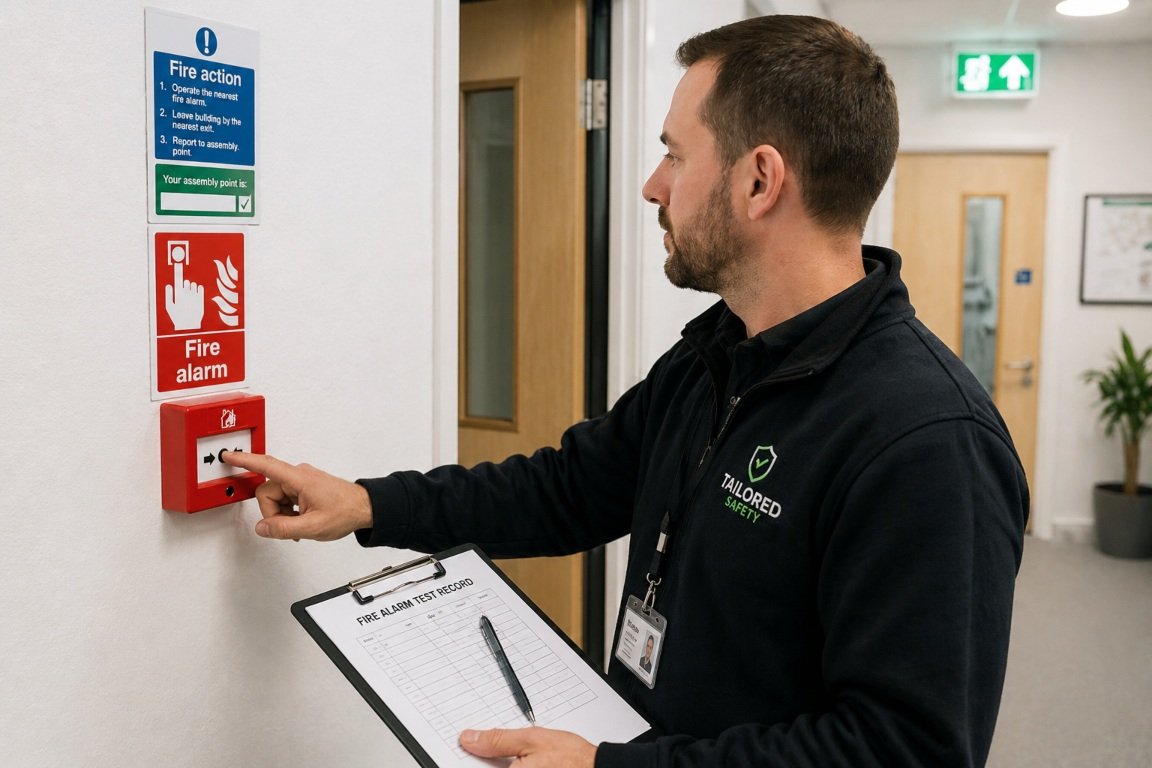
Does your building have an appropriate fire detection and alarm system? Is it tested weekly, and are the test results recorded? Is the system serviced at least twice a year by a competent engineer? Are all detection devices, including smoke detectors and heat detectors, in the right locations and unobstructed? Do all staff know what the alarm sounds like and what to do when they hear it?
2. Means of Escape
Are all escape routes clearly signed with compliant fire exit signage? Are escape routes kept clear and unobstructed at all times? Do all fire exit doors open in the direction of escape? Are fire doors fitted with self-closing devices and in good working condition? Is the escape route suitable for all building occupants, including anyone with mobility or sensory impairments?
3. Emergency Lighting
Is emergency lighting installed along all escape routes and at exit points? Is it tested monthly using the test button, with results recorded? Is a full discharge test carried out annually? Does the emergency lighting provide adequate illumination for people to find their way out safely in the dark?
4. Firefighting Equipment
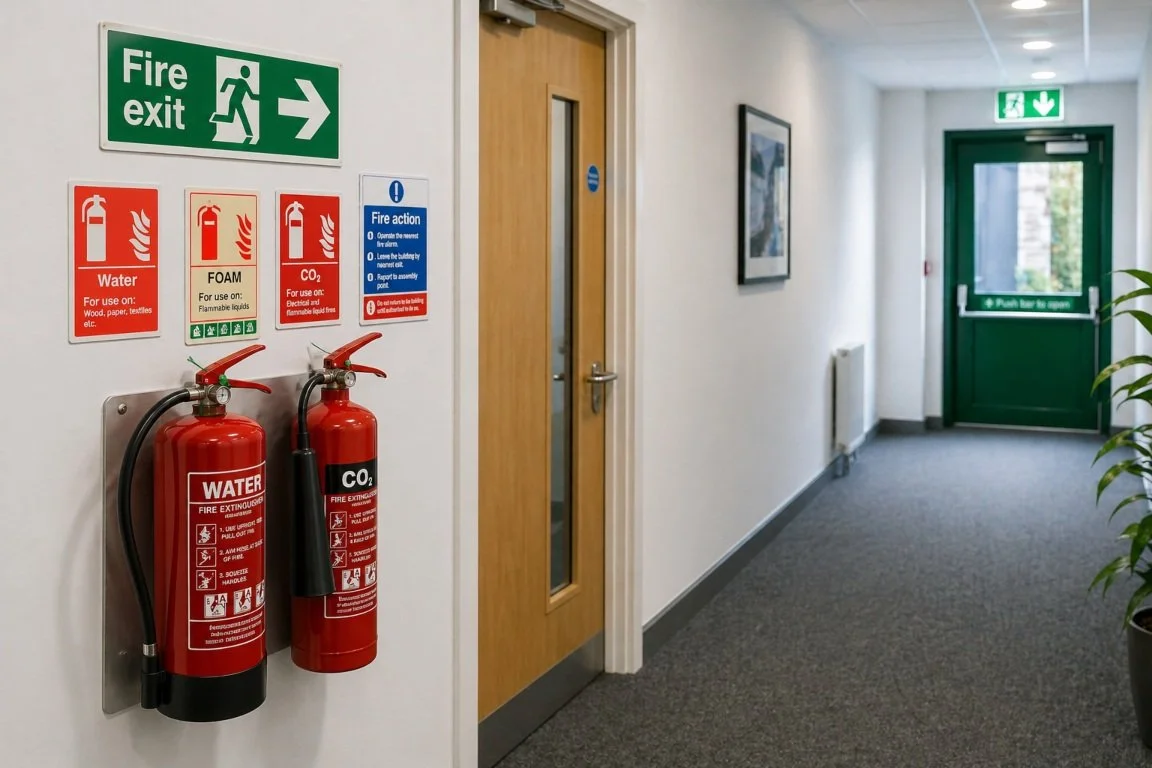
Are the correct types of fire extinguisher provided for the fire risks present in your building? Are extinguishers located in accessible positions along escape routes? Are they serviced annually by a competent person? Do staff know which extinguisher to use on which type of fire? Are extinguisher locations clearly signed?
5. Fire Safety Signage
Are fire exit signs displayed at every exit and along escape routes? Are fire action notices displayed at all fire alarm call points? Are fire extinguisher signs displayed above each extinguisher? Are fire door keep shut signs on all fire doors? Is all signage compliant with current standards and clearly visible?
6. Sources of Ignition and Fuel
Have you identified all potential sources of ignition in your building? This includes electrical equipment, heating systems, cooking appliances, naked flames, hot work activities, and smoking. Have you identified all sources of fuel, including paper, cardboard, textiles, flammable liquids, timber, and waste materials? Are ignition sources and fuel sources kept apart wherever possible?
7. Staff Training and Fire Drills
Have all staff received fire safety training, including what to do on discovering a fire, how to raise the alarm, the evacuation procedure, and where the assembly point is? Are fire drills carried out at least once a year, preferably twice? Are the results of fire drills recorded, including any issues identified? Are new staff given fire safety induction training on their first day?
8. Record Keeping
Are records kept of weekly fire alarm tests, monthly emergency lighting tests, annual fire extinguisher servicing, annual fire alarm servicing, fire drills, staff fire safety training, and any maintenance or repairs to fire safety systems? Good record keeping is essential evidence in the event of an inspection or incident.
9. Review and Update
When was your fire risk assessment last reviewed? It should be reviewed at least annually, after any significant change to the building, layout, or occupancy, after a fire or near miss, and whenever new fire hazards are introduced. If it has been more than 12 months since your last review, it is overdue.
Need a Professional Fire Risk Assessment?
If your fire risk assessment is missing, out of date, or you are not confident it meets the legal standard, our fire risk assessment service provides a full inspection of your premises carried out by qualified fire safety consultants. You will receive a comprehensive report with findings, photographs, risk ratings, and a prioritised action plan.
For smaller businesses, see our dedicated fire risk assessments for small businesses page for pricing and packages designed for SMEs.
You can also read about the 5 most common fire safety failures we find during inspections to make sure your business is not making the same mistakes.
