
SSIP Accreditation Explained: What UK Contractors Need to Know
If you work as a contractor in the UK, you have probably been asked whether you have SSIP accreditation. It comes up during tender submissions, pre-qualification questionnaires, and conversations with principal contractors. For many businesses, it is the gateway to winning larger and more profitable contracts.
But SSIP can be confusing. There are multiple schemes, each with their own application process, and the documentation requirements can feel overwhelming if you are approaching it for the first time. This guide breaks it down.
What Is SSIP?
SSIP stands for Safety Schemes in Procurement. It is not a single accreditation body but an umbrella organisation that sets a common standard across multiple health and safety assessment schemes in the UK. The principle behind SSIP is mutual recognition: if you pass one SSIP-member scheme, your assessment is recognised by all the others, reducing duplication for contractors who work across different clients and sectors.
The most well-known SSIP member schemes include CHAS (Contractors Health and Safety Assessment Scheme), SafeContractor, Constructionline, SMAS (Safety Management Advisory Services), and Acclaim Accreditation.
Each scheme has its own application process and fee structure, but the core assessment criteria are aligned through the SSIP framework. This means the documentation you need is broadly the same regardless of which scheme you apply to.

Why Do Contractors Need SSIP?
SSIP accreditation is not a legal requirement. However, it has become a de facto requirement for winning a large proportion of commercial, public sector, and construction work in the UK. Many principal contractors, local authorities, housing associations, and facilities managers will only work with SSIP-accredited subcontractors. Without it, your tender is rejected at the first stage.
The commercial benefit is significant. Accreditation opens the door to work that is otherwise inaccessible, demonstrates your commitment to health and safety, and gives clients confidence that your safety management system meets a recognised standard.
What Documentation Do You Need?
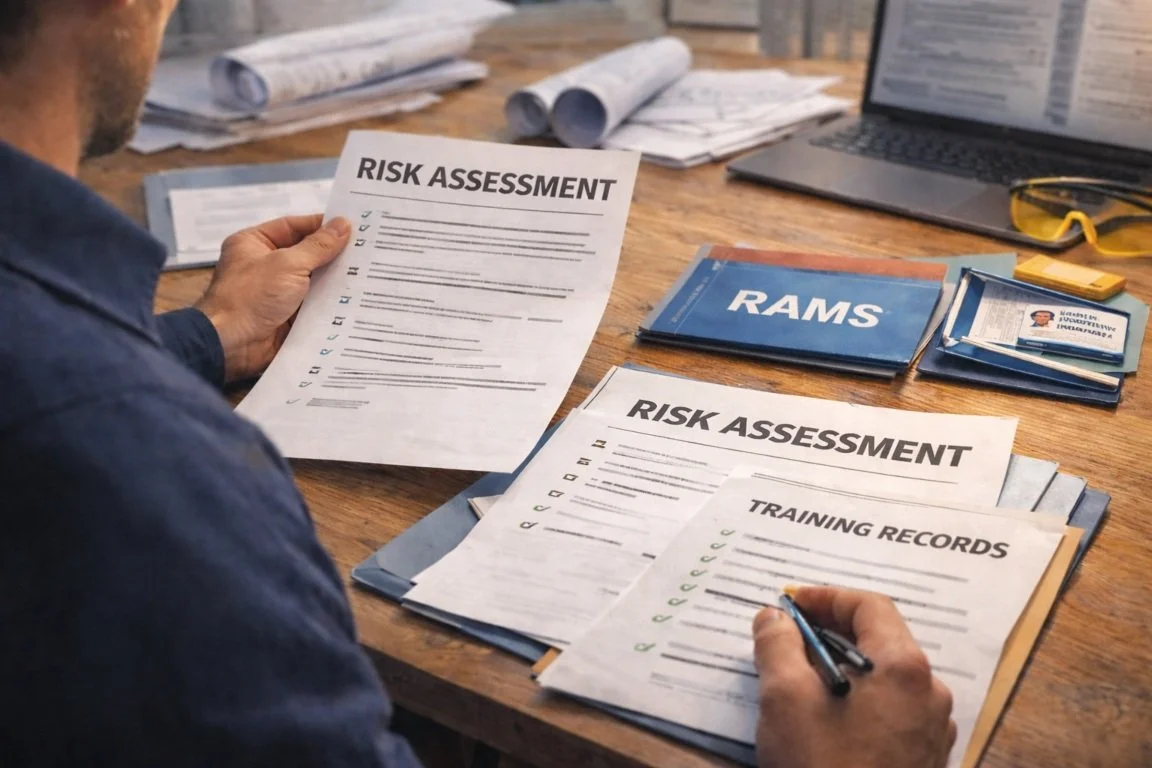
To pass an SSIP assessment, you will typically need to provide the following documentation. A current, signed health and safety policy with a statement of intent, organisation of responsibilities, and arrangements. Risk assessments specific to your main work activities, not generic templates. Method statements or RAMS for higher-risk tasks. Evidence of staff training, including CSCS cards, qualifications, and refresher records. Employers' liability insurance certificate. Public liability insurance certificate. Accident and incident records. Evidence of consultation with employees on health and safety matters.
If your business carries out construction work, you may also need to provide evidence of CDM compliance, including Construction Phase Plans and evidence that you understand your duties under the CDM Regulations 2015.
The key theme is specificity. Assessors are trained to spot generic or template documentation, and they will ask for evidence that your systems reflect your actual work activities. If your risk assessments could apply to any business in any sector, they are unlikely to pass.
How to Pass First Time
The most common reason contractors fail their SSIP assessment is incomplete or inadequate documentation. The work itself may be exemplary, but if the paperwork does not reflect that, the application will be returned for corrections or rejected outright.
Start by reviewing your existing documentation against the requirements listed above. Make sure your health and safety policy is current and signed, your risk assessments are specific to your activities, your training records are complete, and your insurance is in date.
If your RAMS need updating or you do not have task-specific method statements, our risk assessments and method statements service can produce compliant documentation tailored to your work.
If you need help with your policy, our policies and handbooks service can create or update yours to meet SSIP requirements.
Getting Expert Support
If you would prefer professional support through the entire SSIP process, our SSIP and pre-qualification audit support service is designed specifically for contractors preparing for accreditation. We review your documentation, identify gaps, produce any missing documents, and guide you through the application process so you pass first time.
Investing in accreditation now pays for itself many times over through the contracts it unlocks.
