
Construction Site Safety: Common Issues Found During CDM Audits
Construction site safety is a legal requirement under the Construction (Design and Management) Regulations 2015 (CDM 2015), but it is also essential for protecting workers, reducing incidents, and keeping projects on track. One of the most effective ways to ensure compliance is through regular CDM audits.
To prevent this, contractors should ensure their documentation is site-specific and clearly outlines control measures for the exact tasks being undertaken. Preparing detailed RAMS for construction contractors helps demonstrate compliance with CDM regulations and provides clear safe systems of work for operatives on site.
However, CDM audits frequently uncover the same recurring safety issues across construction sites. Understanding these common findings can help duty holders take proactive steps to improve safety performance and avoid enforcement action.
1. Inadequate Construction Phase Plans
A poorly developed or generic Construction Phase Plan (CPP) is one of the most common non-conformances found during CDM audits. Typical issues include:
Plans not tailored to the specific project
Missing site-specific risks and control measures
Failure to update the plan as work progresses
Under CDM 2015, the Construction Phase Plan must clearly demonstrate how health and safety will be managed throughout the construction phase. A well-prepared plan is a key indicator of effective site management.
👉 For expert support with compliant planning, visit Tailored Safety Solutions.
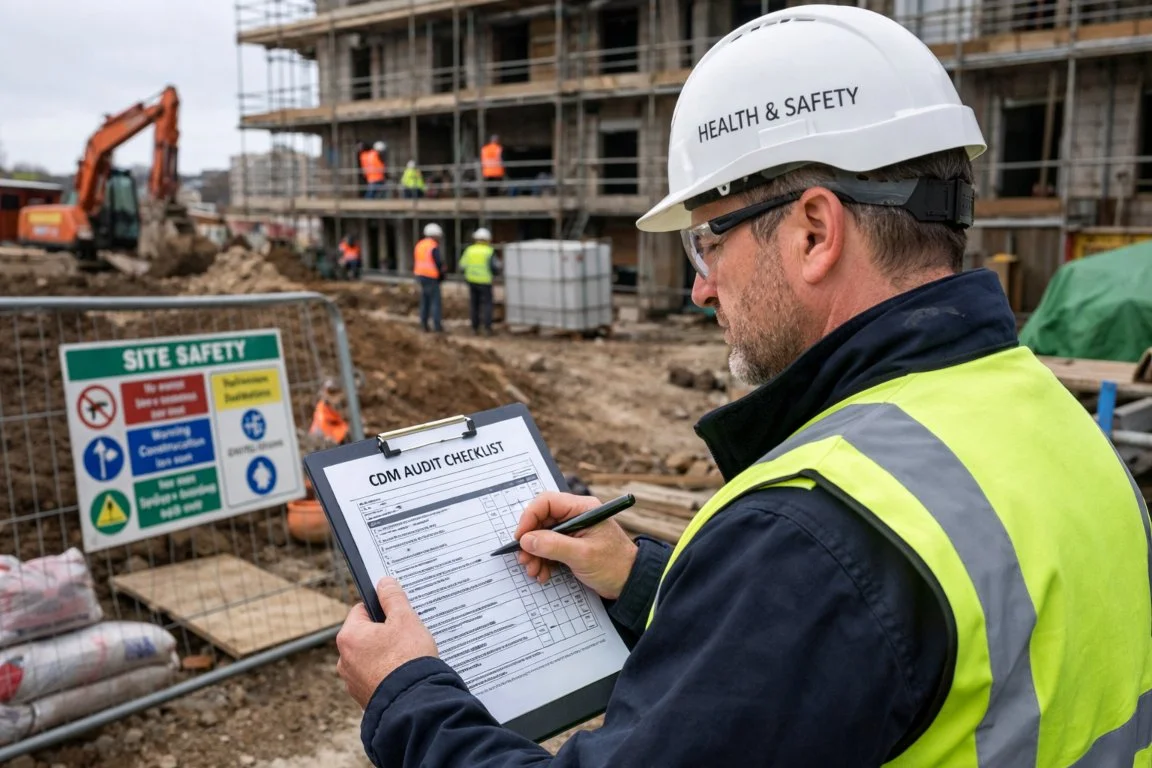
2. Poor Quality Risk Assessments and Method Statements (RAMS)
CDM audits frequently identify weaknesses in risk assessments and method statements, including:
Generic or copied RAMS
Hazards not fully identified
Control measures that are impractical or not followed on site
RAMS should accurately reflect how work is carried out and be clearly communicated to the workforce. Auditors will often speak directly to operatives to confirm whether safety procedures are understood and implemented.
Compliant RAMS are essential for every construction project. Our RAMS for contractors service provides fast, professional documentation.
3. Lack of Competence Evidence
Demonstrating competence is a fundamental requirement under CDM 2015, yet audits often reveal insufficient evidence for:
Subcontractor competence checks
Training records and certifications
Adequate supervision arrangements
Failing to verify competence increases the risk of accidents and exposes duty holders to enforcement action. Maintaining clear records and ongoing competence reviews is essential for CDM compliance.
Make sure you understand your CDM duties. Our guide explains CDM roles and responsibilities for contractors, clients, and designers.
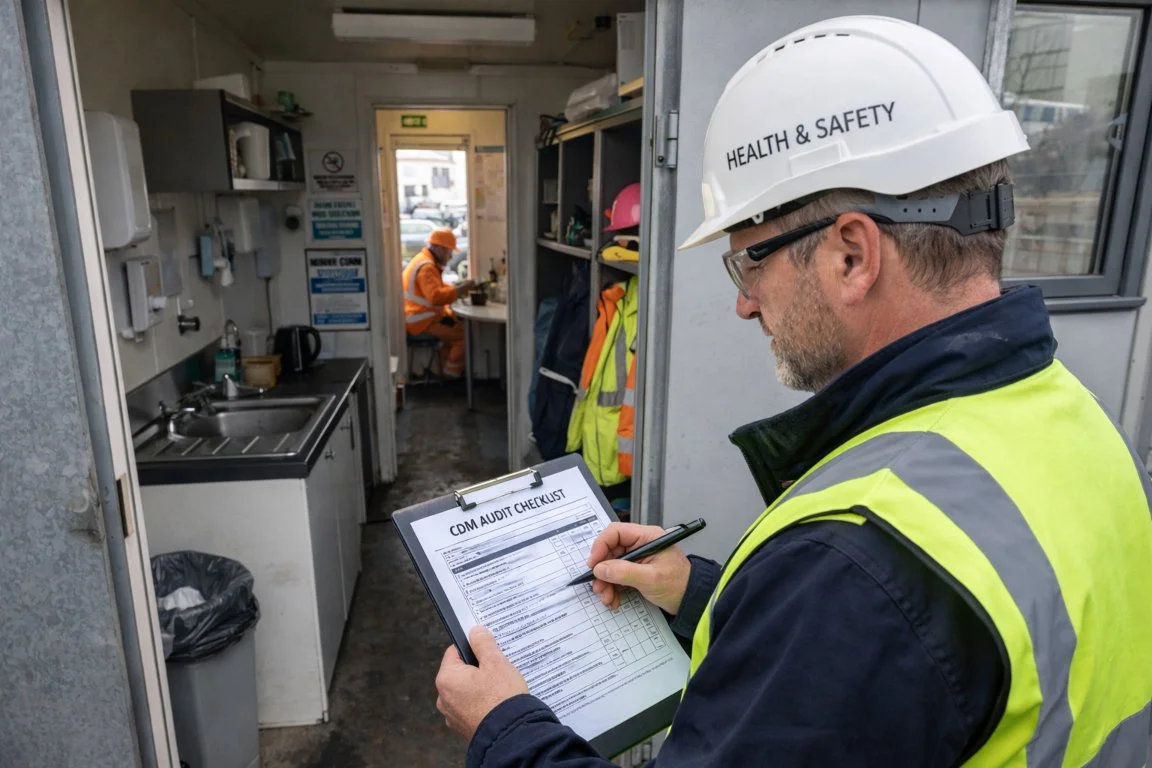
4. Inadequate Welfare Facilities
Welfare provision is a legal requirement and a frequent focus during CDM audits. Common issues include:
Insufficient toilets or washing facilities
Poor cleanliness or maintenance
Lack of drinking water or suitable rest areas
Auditors often view welfare standards as a direct reflection of a company’s overall commitment to construction site safety and worker wellbeing.
5. Poor Communication and Safety Engagement
Even when safety systems are in place, CDM audits often highlight failures in communication, such as:
Workers unaware of site-specific hazards
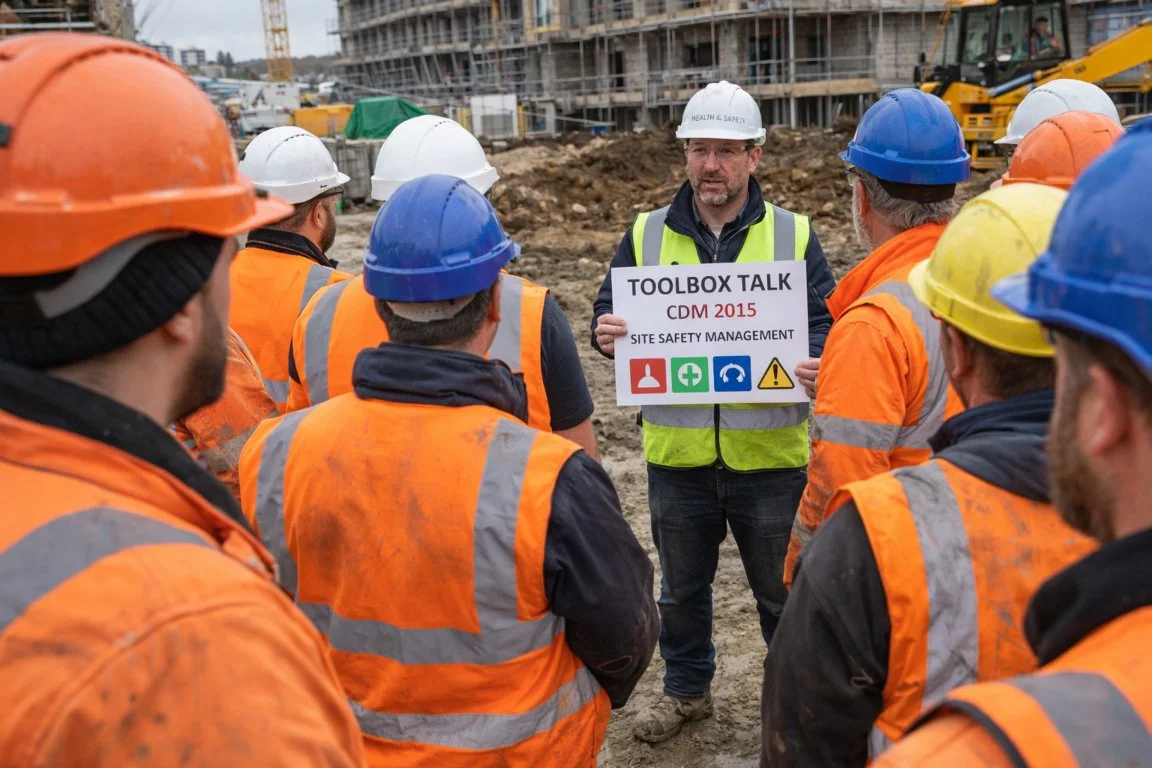
Limited or ineffective toolbox talks
No clear process for reporting near misses
Strong safety communication ensures that procedures are understood, followed, and reinforced across the site.
6. Failure to Review and Update Safety Arrangements
Construction projects are constantly changing, but safety documentation is often not updated accordingly. CDM audits regularly identify:
Outdated Construction Phase Plans
RAMS not reviewed following changes or incidents
Lack of formal safety reviews
Regular reviews are essential to ensure that safety arrangements remain suitable and effective as site conditions evolve.
Strengthening CDM Compliance Through Proactive Safety Management
Many of the issues identified during CDM audits arise from gaps in planning, communication, and ongoing review rather than a lack of intent. By strengthening construction site safety processes, maintaining up-to-date documentation, and ensuring competence across all roles, duty holders can significantly improve compliance with CDM 2015.
For contractors seeking formal accreditation or preparing for principal contractor scrutiny, professional CDM and SSIP audit support can help identify compliance gaps early and ensure policies, procedures, and records meet required standards before inspection.
A proactive approach to health and safety not only supports better audit outcomes but also helps create safer, more efficient construction sites. Regular reviews, meaningful worker engagement, and professional safety support ensure risks are controlled as projects progress.
For organizations looking to improve CDM compliance and raise safety standards, expert guidance can make a measurable difference. Learn more about ongoing support through Tailored Safety’s retained health and safety services.
