
Your Role and Responsibilities Under the CDM Regulations 2015
The Construction (Design and Management) Regulations 2015 (CDM 2015) play a vital role in improving health and safety in the UK construction industry. Whether you are a client, principal designer, contractor, or worker, understanding your responsibilities under CDM regulations is essential for legal compliance and safe project delivery.
At Tailored Safety, we support businesses across the UK with CDM compliance, risk management, and construction health and safety advice. If you need expert guidance, you can contact Tailored Safety for CDM support
What Are the CDM Regulations 2015?
The CDM Regulations 2015 are a legal framework designed to manage health, safety, and welfare throughout construction projects. They apply to all construction work, regardless of size, and aim to:
Reduce construction-related accidents and ill health
Improve project planning and coordination
Ensure risks are identified and controlled early
Key Duty Holders Under CDM 2015
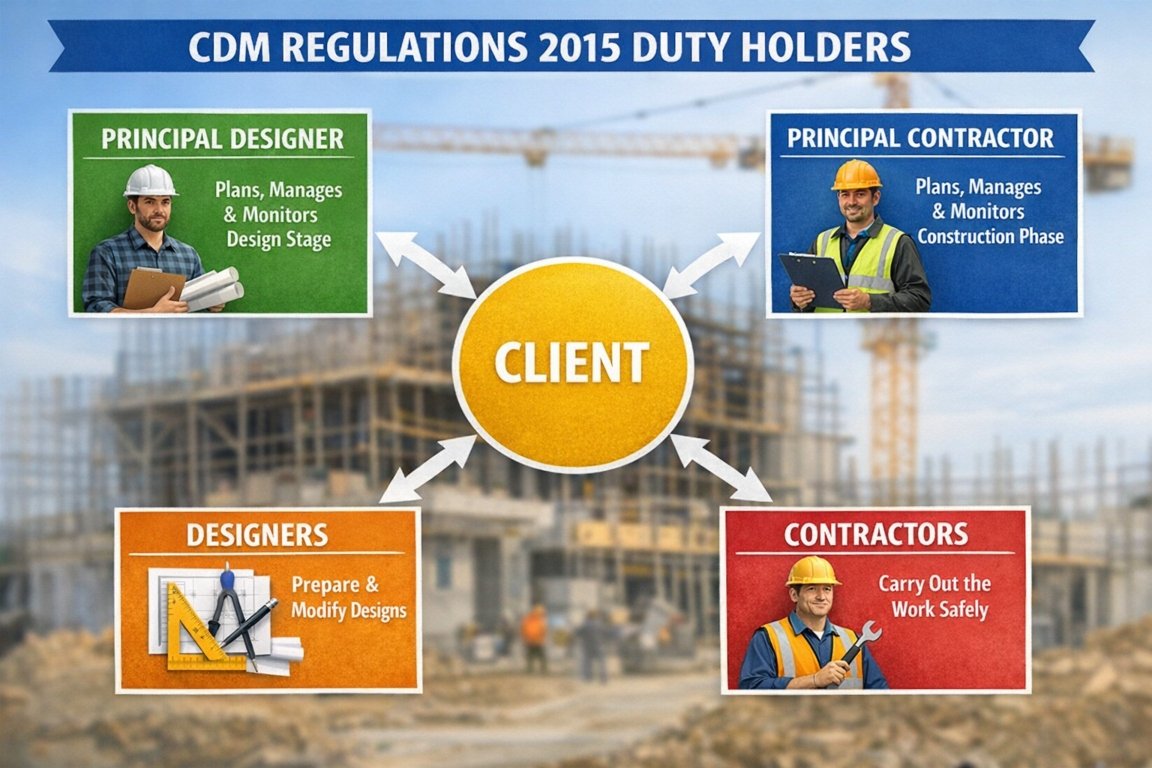
CDM 2015 identifies specific duty holders, each with legally defined responsibilities.
Client Responsibilities Under CDM 2015
Clients have overall responsibility for ensuring health and safety arrangements are in place. Client duties include:
Appointing a Principal Designer and Principal Contractor where required
Ensuring adequate time and resources are allocated
Providing pre-construction information
Making sure suitable management arrangements are maintained
Even domestic clients have duties, which are often transferred to other duty holders.
Contractors need compliant RAMS for every project. Our risk assessments and method statements service provides tailored documents with fast turnaround.
Principal Designer Duties
The Principal Designer is responsible for managing health and safety during the pre-construction phase. Key duties include:
Identifying and eliminating foreseeable risks at the design stage
Coordinating designers and sharing safety information
Ensuring designers comply with their CDM duties

Principal Contractor Responsibilities
The Principal Contractor manages health and safety during the construction phase. Their responsibilities include:
Developing and maintaining the Construction Phase Plan
Coordinating contractors and subcontractors
Ensuring site welfare facilities are provided
Monitoring site safety performance
Designer, Contractor and Worker Responsibilities
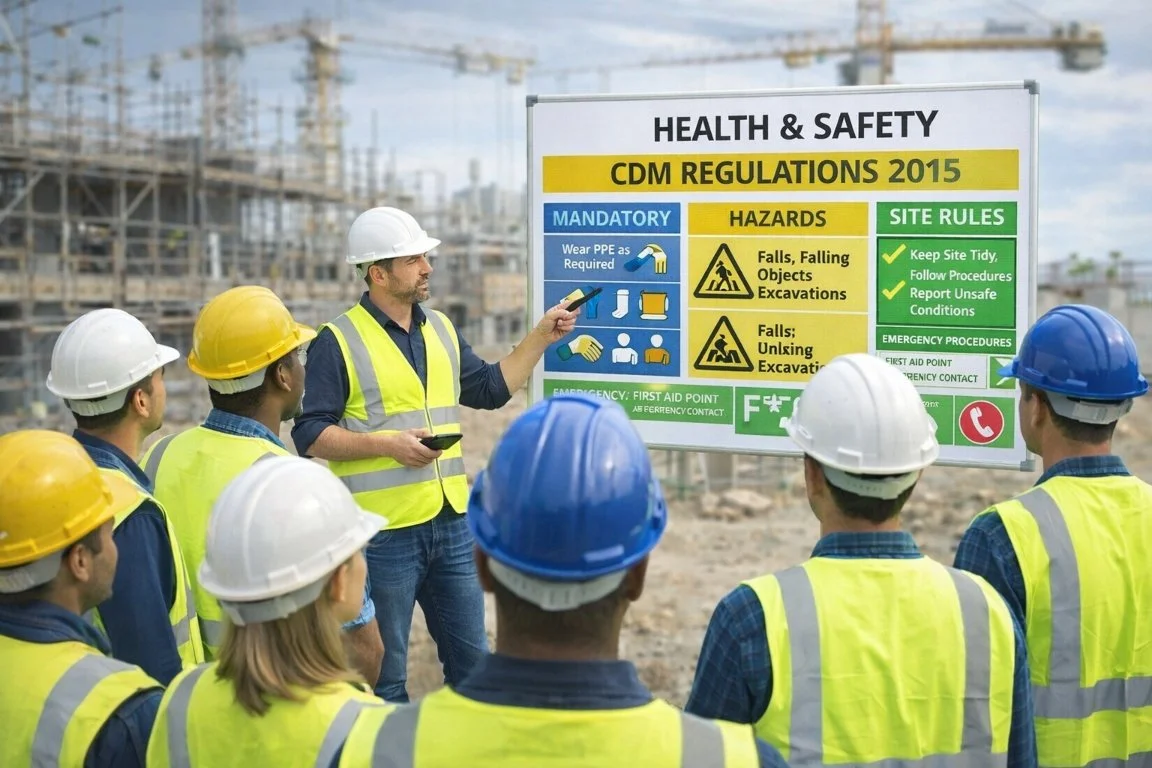
Designers must eliminate hazards where possible and communicate residual risks. Contractors must plan and manage work safely, while workers must follow training, use equipment correctly, and report unsafe conditions.
Strong cooperation between all duty holders is essential for full CDM 2015 compliance.
Why CDM Compliance Is Important
Failure to comply with CDM Regulations 2015 can result in:
Serious workplace injuries or fatalities
Enforcement action from the HSE
Significant fines and project delays
Effective CDM management improves project efficiency, safety culture, and legal compliance across construction sites.
See common issues found during CDM audits in our guide on construction site safety and CDM audit findings.
How Tailored Safety Supports CDM Compliance
Tailored Safety provides expert support to help duty holders understand and meet their CDM 2015 responsibilities, including:
CDM advisory services
Principal Designer support
Construction Phase Plans
Risk assessments and method statements
If you need professional guidance, speak to Tailored Safety’s CDM specialists today.
