
What Are RAMS? A Simple Guide for UK Businesses
If you operate a business in the UK — especially in construction, maintenance, facilities management, manufacturing or engineering — you've likely come across the term RAMS. Yet many organisations still aren’t sure what RAMS include, how to use them correctly, or whether they are a legal requirement.
If you need professional RAMS written for your business, our risk assessments and method statements service provides tailored documents for any trade or sector.
This guide breaks down everything UK businesses need to know about RAMS and how they help protect your team, your clients and your business.
For expert support, visit our RAMS: Risk Assessments & Method Statements page.
What Are RAMS?
RAMS stands for Risk Assessment and Method Statement. These documents are used together to explain:
1. The Risks (Risk Assessment)
A risk assessment identifies hazards, who may be harmed, and the measures needed to control those risks.
2. The Safe Working Method (Method Statement)
A method statement describes how to carry out a task safely, step-by-step, using the controls highlighted in the risk assessment.

Why Are RAMS Important for UK Businesses?
✔ Legal Compliance
RAMS help employers meet their duties under UK regulations such as:
The Management of Health and Safety at Work Regulations 1999
The Health and Safety at Work etc. Act 1974
They demonstrate “suitable and sufficient” planning, which is essential during audits, inspections or client reviews.
✔ Clear Communication on Site
RAMS documents support safe working by helping supervisors and workers understand:
the task
the hazards
the correct sequence of work
the safety measures required
This reduces confusion, delays, and unsafe shortcuts.
✔ Professionalism & Winning More Work
Clients and principal contractors frequently require RAMS before work starts. High-quality RAMS can strengthen tenders and show your business operates safely and responsibly.
What Should a Good RAMS Document Include?
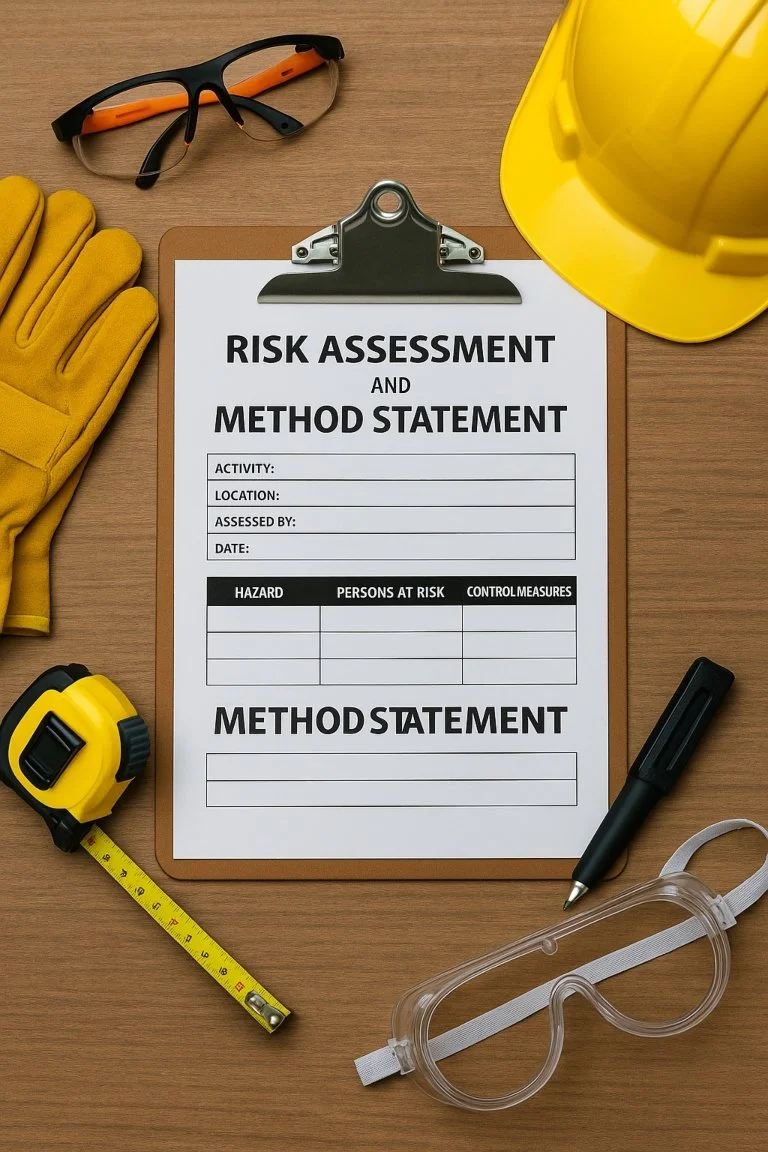
1. Risk Assessment Section
A complete risk assessment should include:
Task details, location and personnel
Identified hazards
Those at risk
Risk ratings
Control measures
Review schedule
2. Method Statement Section
A strong method statement includes:
Step-by-step work sequence
Required tools, equipment and plant
Access arrangements and site conditions
Roles and responsibilities
PPE and permit-to-work requirements
Emergency procedures
Version control and sign-off
When Should Businesses Use RAMS?
RAMS are essential when tasks involve:
Working at height
Confined spaces
Electrical work
Excavation
Hot works
Lifting operations
They’re also required when clients request them, when operating in public environments, or whenever the work is complex or involves multiple contractors.
For a more detailed comparison, read our blog on RAMS vs risk assessments and when each one is needed.
Common RAMS Mistakes to Avoid
❌ Generic RAMS templates
➡ RAMS must be specific to the task, site and people involved.
❌ Unclear control measures
➡ Vague phrases like “use proper PPE” aren’t enough — be precise.
❌ Failing to communicate RAMS
➡ Workers must be briefed and able to ask questions before work starts.
❌ Not reviewing RAMS
➡ RAMS must be updated when the environment or task changes.
In these situations, preparing detailed RAMS for contractors helps demonstrate compliance with CDM requirements and provides clear, structured safe systems of work for site teams.
How to Create RAMS for Your Business
Seeking support with professionally prepared risk assessments and method statements can help ensure documentation is accurate, compliant, and tailored to the exact activities being carried out.
Follow these practical steps:
Identify the task
Break it into steps
Assess hazards at each stage
Define and document control measures
Write a clear method statement
Brief your operatives
Monitor, review and update
For professionally prepared RAMS that reflect your industry and activities, visit our page: Risk Assessments & Method Statements (RAMS)
Want to learn how to write your own? See our step-by-step guide on how to write effective RAMS for construction and maintenance work.
Final Thoughts
RAMS are more than compliance documents — they are essential tools for improving safety, building client trust, reducing accidents and demonstrating professionalism.
Whether you are a sole contractor or a multi-site business, investing in clear, accurate RAMS documents helps protect workers, strengthens contract bids and ensures legal compliance.